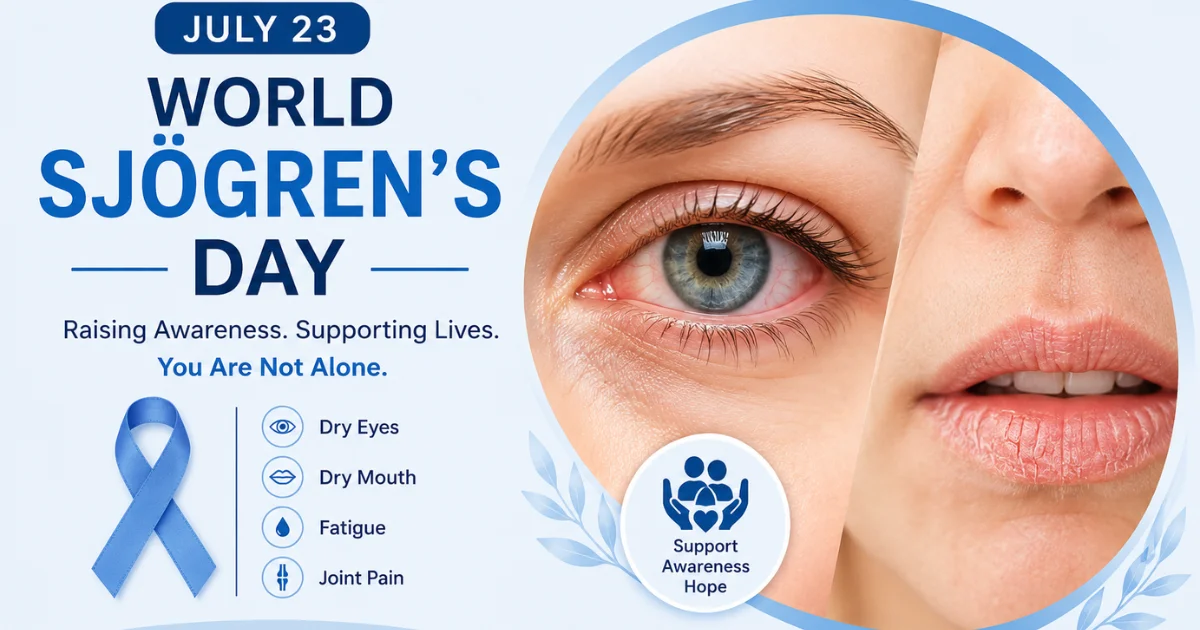
Every year on July 23, people around the world observe World Sjögren’s Day to raise awareness about Sjögren’s disease (also called Sjögren’s syndrome), a chronic autoimmune disorder that affects millions of people. Despite being one of the most common autoimmune diseases, it is often underdiagnosed because many of its symptoms develop gradually and can resemble those of other conditions.
World Sjögren’s Day is an opportunity to educate the public about the disease, promote early diagnosis, support ongoing research, and recognize the daily challenges faced by those living with this lifelong condition.
In this article, you’ll learn about the history of World Sjögren’s Day, common symptoms, causes, diagnosis, treatment options, and practical tips for managing Sjögren’s disease.
What is World Sjögren’s Day?
World Sjögren’s Day is observed annually on July 23, the birthday of Swedish ophthalmologist Dr. Henrik Sjögren, who first described the disease in detail.
The day aims to:
- Increase awareness of Sjögren’s disease
- Encourage early diagnosis
- Improve understanding among healthcare professionals and the public
- Support patients and caregivers
- Promote research into better treatments and, ultimately, a cure
What is Sjögren’s Disease?
Sjögren’s disease is a chronic autoimmune disease in which the body’s immune system mistakenly attacks its own moisture-producing glands, especially the salivary and tear glands.
This leads to symptoms such as:
- Dry eyes
- Dry mouth
- Fatigue
- Joint pain
In some people, the disease may also affect the lungs, kidneys, nervous system, skin, liver, or other organs.
Primary and Secondary Sjögren’s Disease
Doctors generally classify the condition into two types:
Primary Sjögren’s Disease
Occurs on its own without another autoimmune disorder.
Secondary Sjögren’s Disease
Develops alongside another autoimmune disease, such as:
- Rheumatoid arthritis
- Lupus
- Systemic sclerosis
Causes of Sjögren’s Disease
The exact cause is unknown, but experts believe several factors contribute:
- Genetic predisposition
- Immune system dysfunction
- Hormonal influences
- Viral or environmental triggers
Women, particularly those over the age of 40, are more commonly affected, although the disease can occur in men and younger people as well.
Common Symptoms
Symptoms vary from person to person and may worsen over time.
Dry Eyes
People may experience:
- Burning sensation
- Redness
- Itching
- Blurred vision
- Feeling like sand or grit is in the eyes
Dry Mouth
Common signs include:
- Difficulty swallowing
- Difficulty speaking for long periods
- Frequent thirst
- Dental cavities
- Mouth sores
- Bad breath
Other Symptoms
Many people also experience:
- Persistent fatigue
- Joint pain and stiffness
- Muscle aches
- Dry skin
- Dry nose
- Dry throat
- Chronic cough
- Swollen salivary glands
- Vaginal dryness (in some individuals)
Possible Complications
If left untreated, Sjögren’s disease may lead to:
- Tooth decay
- Gum disease
- Eye infections
- Corneal damage
- Difficulty eating
- Lung inflammation
- Kidney problems
- Peripheral neuropathy
- Increased risk of lymphoma (rare but important)
Regular medical follow-up helps detect complications early.
How is Sjögren’s Disease Diagnosed?
Diagnosis can be challenging because symptoms overlap with other conditions.
A healthcare provider may recommend:
Medical History and Physical Examination
Review of symptoms and overall health.
Blood Tests
These may look for:
- Autoantibodies (such as SSA/Ro and SSB/La)
- Markers of inflammation
- Immune system activity
Eye Tests
Tests such as the Schirmer test measure tear production.
Saliva Tests
These evaluate how well the salivary glands are functioning.
Imaging or Biopsy
In some cases, imaging of the salivary glands or a minor salivary gland biopsy may help confirm the diagnosis.
Treatment Options
There is currently no cure for Sjögren’s disease, but treatment focuses on relieving symptoms, preventing complications, and protecting affected organs.
Depending on the individual, treatment may include:
- Artificial tears
- Saliva substitutes
- Prescription medications to stimulate tear or saliva production
- Medicines to control inflammation or immune activity
- Pain-relieving medications for joint symptoms
- Good dental care and regular eye examinations
Treatment plans should always be individualized and supervised by a healthcare professional.
Lifestyle Tips for Managing Sjögren’s Disease
Daily habits can make a meaningful difference.
Stay Hydrated
Sip water regularly throughout the day.
Protect Your Eyes
Use lubricating eye drops if recommended and wear sunglasses outdoors.
Practice Good Oral Hygiene
Brush twice daily, floss regularly, and visit your dentist routinely.
Use a Humidifier
Adding moisture to indoor air may help reduce dryness.
Eat a Balanced Diet
Focus on:
- Fruits
- Vegetables
- Whole grains
- Lean protein
- Healthy fats
Stay Active
Regular exercise may improve energy levels, joint flexibility, and overall well-being.
Avoid Smoking
Smoking can worsen dry mouth and irritate the eyes and respiratory tract.
Who Is at Higher Risk?
The risk is higher among:
- Women
- Adults over 40 years
- People with other autoimmune diseases
- Individuals with a family history of autoimmune disorders
However, anyone can develop the disease.
Importance of Early Diagnosis
Many people live with symptoms for years before receiving a diagnosis.
Early recognition can help:
- Improve quality of life
- Reduce complications
- Protect the eyes and teeth
- Identify organ involvement sooner
- Enable appropriate long-term care
How You Can Support World Sjögren’s Day
You can contribute by:
- Learning about Sjögren’s disease
- Sharing educational resources
- Supporting affected individuals
- Encouraging people with persistent symptoms to seek medical advice
- Participating in awareness campaigns
- Donating to organizations supporting autoimmune disease research
Frequently Asked Questions (FAQs)
1. When is World Sjögren’s Day observed?
It is observed every year on July 23.
2. What is Sjögren’s disease?
It is a chronic autoimmune disease in which the immune system attacks the body’s moisture-producing glands, leading to dry eyes, dry mouth, fatigue, and other symptoms.
3. Is Sjögren’s disease curable?
Currently, there is no cure. However, many treatments can help control symptoms and reduce the risk of complications.
4. Who is most affected?
The disease is more common in women, particularly those over 40 years old, although it can occur in anyone.
5. What are the first signs?
Common early symptoms include dry eyes, dry mouth, fatigue, and joint pain.
6. Can Sjögren’s disease affect organs besides the eyes and mouth?
Yes. In some people, it can affect the lungs, kidneys, nerves, joints, skin, and other organs.
7. Why is World Sjögren’s Day important?
The day promotes awareness, encourages earlier diagnosis, supports research, and helps improve understanding of this often-overlooked autoimmune disease.
Conclusion
World Sjögren’s Day reminds us that even diseases with “invisible” symptoms can have a profound impact on everyday life. By increasing awareness, encouraging timely diagnosis, and supporting ongoing research, we can help improve outcomes for people living with Sjögren’s disease.
If you or someone you know experiences persistent dry eyes, dry mouth, unexplained fatigue, or joint pain, consult a qualified healthcare professional for proper evaluation. Early diagnosis and appropriate management can make a significant difference in maintaining long-term health and quality of life.
Latest Post
- World Contraception Day 2026 Importance, Methods, Benefits and the Need for Better Awareness
- World Physiotherapy Day Importance, Benefits, and the Role of Physiotherapy in Better Health
- World Sexual Health Day Promoting Awareness, Safety, Respect, and Healthy Relationships
- Gujarat Health Machinery Placed On High Alert Following Chandipura Virus Outbreak
- International Overdose Awareness Day 2026 Meaning, Importance, Overdose Prevention & Awareness