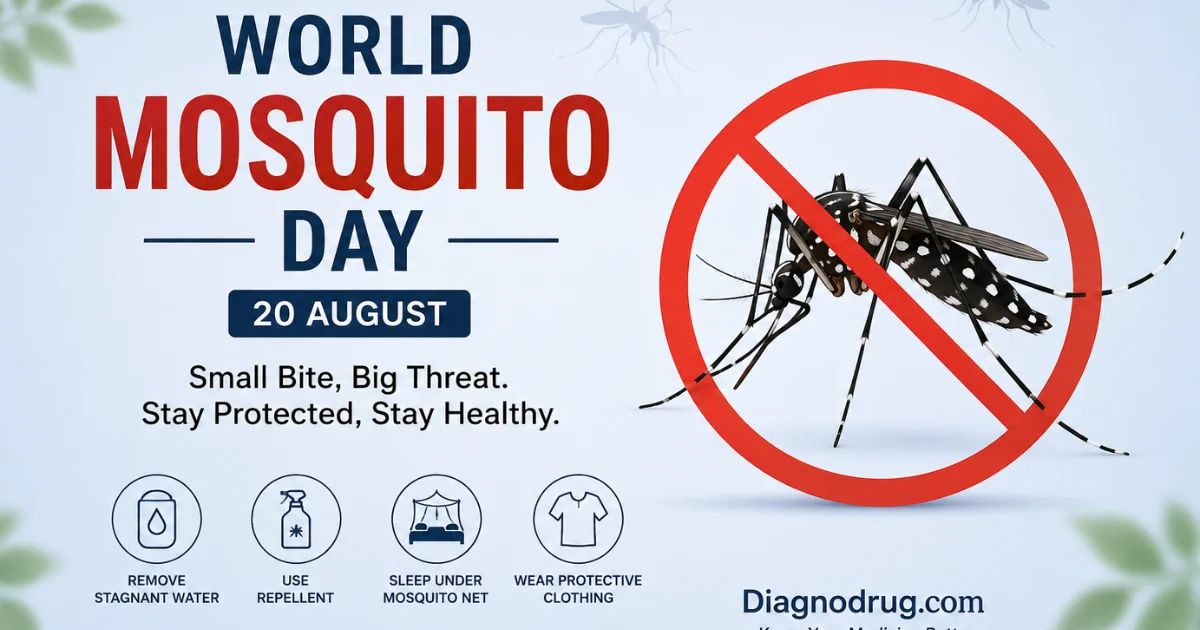
World Mosquito Day 2026
Every year on 20 August, the world observes World Mosquito Day to raise awareness about mosquito-borne diseases and the importance of preventing mosquito breeding. Mosquitoes may seem like tiny insects, but they are among the deadliest creatures on Earth because they transmit diseases that affect millions of people every year.
World Mosquito Day reminds us that simple preventive measures—such as removing stagnant water, using mosquito repellents, and maintaining proper sanitation—can significantly reduce the spread of dangerous diseases like malaria, dengue, chikungunya, Zika virus, yellow fever, and Japanese encephalitis.
In this article, we’ll explore the history, significance, mosquito-borne diseases, prevention strategies, and frequently asked questions about World Mosquito Day.
When is World Mosquito Day Celebrated?
Date: 20 August (Every Year)
World Mosquito Day is observed annually on 20 August to commemorate the groundbreaking discovery made by Sir Ronald Ross in 1897, proving that female Anopheles mosquitoes transmit malaria parasites between humans.
This discovery revolutionized public health and laid the foundation for modern malaria prevention and mosquito control.
History of World Mosquito Day
The history of World Mosquito Day dates back to 20 August 1897, when Sir Ronald Ross, a British physician working in India, discovered that female Anopheles mosquitoes carry the malaria parasite.
Before this discovery, scientists were uncertain about how malaria spread. Ross’s research demonstrated that mosquitoes were responsible for transmitting the disease, helping scientists develop effective prevention methods.
For this remarkable contribution to medical science, Ronald Ross received the Nobel Prize in Physiology or Medicine in 1902.
Today, World Mosquito Day honors his discovery while highlighting the continuing fight against mosquito-borne illnesses worldwide.
Why is World Mosquito Day Important?
Mosquito-borne diseases continue to pose a serious public health challenge, particularly in tropical and subtropical regions.
World Mosquito Day aims to:
- Increase awareness about mosquito-borne diseases.
- Educate communities on preventing mosquito breeding.
- Encourage the use of mosquito protection methods.
- Promote early diagnosis and treatment.
- Support global malaria elimination efforts.
- Inspire governments and organizations to strengthen mosquito control programs.
Public awareness remains one of the most effective tools in reducing disease transmission.
Common Mosquito-Borne Diseases
1. Malaria
Malaria is caused by Plasmodium parasites transmitted through the bite of infected female Anopheles mosquitoes.
Symptoms
- High fever
- Chills
- Sweating
- Headache
- Fatigue
- Nausea
- Vomiting
Without timely treatment, malaria can become life-threatening.
2. Dengue Fever
Dengue is transmitted by Aedes aegypti mosquitoes, which usually bite during the daytime.
Symptoms
- High fever
- Severe headache
- Pain behind the eyes
- Muscle and joint pain
- Skin rash
- Mild bleeding
Severe dengue requires immediate medical attention.
3. Chikungunya
Chikungunya is another viral disease spread by Aedes mosquitoes.
Symptoms
- Fever
- Severe joint pain
- Muscle pain
- Headache
- Fatigue
- Rash
Joint pain may last for weeks or even months.
4. Zika Virus
Although often mild, Zika virus infection can be dangerous during pregnancy because it may cause birth defects in babies.
Symptoms
- Mild fever
- Rash
- Red eyes
- Joint pain
- Headache
5. Japanese Encephalitis
Japanese encephalitis is a viral infection affecting the brain.
Symptoms may include:
- High fever
- Confusion
- Seizures
- Neck stiffness
- Coma in severe cases
Vaccination is available in many high-risk regions.
6. Yellow Fever
Yellow fever is common in parts of Africa and South America.
Symptoms include:
- Fever
- Muscle pain
- Vomiting
- Jaundice
- Bleeding in severe cases
Vaccination offers excellent protection.
How Mosquitoes Spread Diseases
Mosquitoes become infected when they bite an infected human or animal. The disease-causing organism develops inside the mosquito and is then transmitted to another person through subsequent bites.
Not every mosquito spreads disease. Only certain species, including:
- Female Anopheles mosquitoes
- Aedes mosquitoes
- Culex mosquitoes
are responsible for transmitting major mosquito-borne illnesses.
Effective Ways to Prevent Mosquito Bites
Preventing mosquito bites is the best defense against mosquito-borne diseases.
Remove Standing Water
Mosquitoes breed in stagnant water.
Regularly empty:
- Flower pots
- Buckets
- Coolers
- Old tires
- Bird baths
- Water tanks
Use Mosquito Repellents
Apply mosquito repellents containing approved active ingredients on exposed skin according to label instructions.
Sleep Under Mosquito Nets
In malaria-prone regions, insecticide-treated mosquito nets provide excellent protection during sleep.
Wear Protective Clothing
Choose:
- Full-sleeved shirts
- Long pants
- Socks
- Light-colored clothing
to minimize exposed skin.
Install Window Screens
Keep mosquitoes out by installing mesh screens on windows and doors.
Keep Surroundings Clean
Community cleanliness plays a vital role in mosquito control.
Dispose of waste properly and prevent water accumulation around homes.
Use Indoor Mosquito Control
Depending on local guidance, indoor measures such as mosquito coils, vaporizers, or insecticide sprays may help reduce mosquito exposure.
Community Participation Matters
Mosquito control is a shared responsibility.
Communities can organize:
- Cleanliness drives
- Awareness campaigns
- School education programs
- Drainage cleaning
- Waste management initiatives
Collective efforts help reduce mosquito breeding and disease outbreaks.
Interesting Facts About Mosquitoes
- Only female mosquitoes bite humans because they need blood to produce eggs.
- Male mosquitoes feed mainly on nectar and plant juices.
- There are more than 3,500 known mosquito species worldwide.
- Mosquitoes can detect humans through body heat, carbon dioxide, and body odor.
- Even a small amount of stagnant water can become a mosquito breeding site.
World Mosquito Day 2026 Theme
As of now, an official global theme for World Mosquito Day 2026 has not been announced. Many organizations focus on themes related to malaria elimination, vector control, public awareness, and community participation once official campaigns are released.
How You Can Observe World Mosquito Day
You can participate by:
- Cleaning your home and surroundings.
- Eliminating stagnant water.
- Sharing awareness messages on social media.
- Participating in local health campaigns.
- Educating children about mosquito prevention.
- Donating to organizations working on malaria control.
- Encouraging neighbors to maintain clean environments.
Frequently Asked Questions (FAQs)
Why is World Mosquito Day celebrated?
World Mosquito Day is celebrated every year on 20 August to commemorate Sir Ronald Ross’s discovery that mosquitoes transmit malaria and to raise awareness about preventing mosquito-borne diseases.
What is the theme of World Mosquito Day 2026?
At present, no official international theme has been announced for World Mosquito Day 2026.
Which mosquito spreads malaria?
Female Anopheles mosquitoes are responsible for transmitting malaria parasites.
Which mosquito spreads dengue?
Aedes aegypti mosquitoes are the primary carriers of dengue fever.
How can I prevent mosquito breeding at home?
Remove stagnant water, clean water containers regularly, cover storage tanks, dispose of waste properly, and keep your surroundings clean.
Are all mosquitoes dangerous?
No. Only certain mosquito species transmit diseases, and only female mosquitoes bite humans for blood meals.
Conclusion
World Mosquito Day is more than a historical observance—it is a reminder that mosquito-borne diseases remain a significant global health challenge. By understanding how these diseases spread and adopting simple preventive measures, individuals and communities can help reduce infections and save lives.
On 20 August, take a few minutes to inspect your surroundings, eliminate stagnant water, and spread awareness among family and friends. Small actions taken consistently can make a meaningful difference in protecting public health.
Website: Diagnodrug.com – Know Your Medicine Better
Latest Post
- World Contraception Day 2026 Importance, Methods, Benefits and the Need for Better Awareness
- World Physiotherapy Day Importance, Benefits, and the Role of Physiotherapy in Better Health
- World Sexual Health Day Promoting Awareness, Safety, Respect, and Healthy Relationships
- Gujarat Health Machinery Placed On High Alert Following Chandipura Virus Outbreak
- International Overdose Awareness Day 2026 Meaning, Importance, Overdose Prevention & Awareness