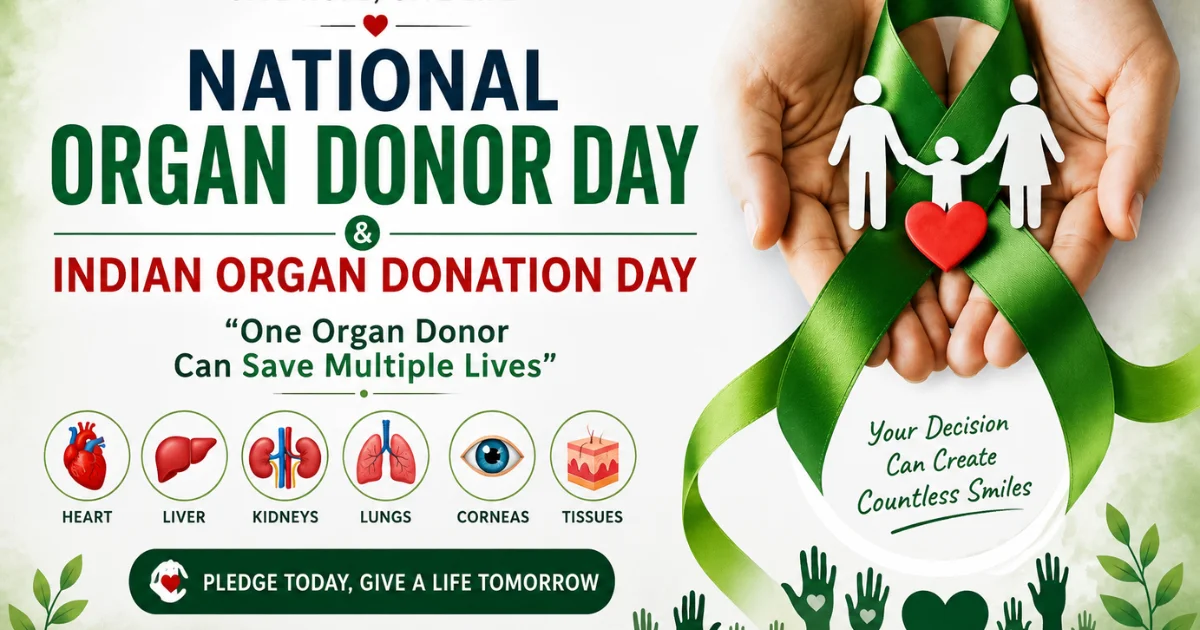
Organ donation is one of the greatest acts of kindness a person can perform. It is a selfless gift that can save lives, restore health, and bring hope to patients suffering from end-stage organ failure. National Organ Donor Day and Indian Organ Donation Day are observed to raise awareness about the importance of organ donation, encourage more people to register as organ donors, and honor the families who have made the life-changing decision to donate the organs of their loved ones.
Thousands of people around the world are waiting for life-saving organ transplants. Unfortunately, the demand for organs is much higher than the number of available donors. By spreading awareness and encouraging voluntary organ donation, we can help reduce this gap and give countless patients a second chance at life.
What is National Organ Donor Day?
National Organ Donor Day is observed every year on February 14 in several countries, including the United States, to encourage people to register as organ, eye, and tissue donors. The day highlights the life-saving impact of organ donation and recognizes the generosity of donors and their families.
What is Indian Organ Donation Day?
Indian Organ Donation Day is observed annually in August (the exact date may vary based on the official observance announced by health authorities). The day is dedicated to promoting awareness about organ donation in India, recognizing organ donors and transplant teams, and encouraging citizens to pledge their organs after death.
India has made significant progress in organ transplantation, but the need for donated organs still far exceeds the available supply. Awareness campaigns on this day help educate people about the importance of organ donation and dispel common myths.
Why is Organ Donation Important?
Every year, thousands of patients suffer from organ failure due to diseases, injuries, or congenital conditions. Many of them depend on organ transplantation as their only chance of survival.
Organ donation can:
- Save multiple lives.
- Improve the quality of life for transplant recipients.
- Reduce waiting times for patients.
- Support medical research and education (when applicable).
- Give hope to families facing critical health conditions.
One organ donor can potentially save up to eight lives through organ donation and improve many more through tissue donation.
Which Organs Can Be Donated?
Several organs can be donated after death, and in some cases while living.
Major organs include:
- Heart
- Liver
- Kidneys
- Lungs
- Pancreas
- Intestine
Tissues that may also be donated include:
- Corneas (eyes)
- Skin
- Bone
- Heart valves
- Tendons
- Blood vessels
Living Organ Donation
Living donation is possible for certain organs and tissues.
Examples include:
- One kidney
- Part of the liver
- Part of the lung (selected cases)
- Bone marrow
- Blood and stem cells
Living donation is performed only after thorough medical evaluation to ensure the safety of both the donor and the recipient.
Who Can Become an Organ Donor?
Almost anyone can become an organ donor regardless of age. The final decision depends on medical evaluation at the time of donation.
Suitable donors may include:
- Healthy adults
- Older adults with healthy organs
- Brain-dead patients whose families consent to donation
- Living donors meeting medical eligibility criteria
People with certain medical conditions may still be able to donate some organs or tissues.
Benefits of Organ Donation
1. Saves Lives
The most important benefit is giving critically ill patients another chance to live.
2. Improves Quality of Life
Recipients often regain independence and return to work, education, and family life after successful transplantation.
3. Creates a Lasting Legacy
Organ donors continue to make a positive impact even after their lifetime by helping others.
4. Supports Medical Science
Some donated tissues contribute to research, education, and future medical advances.
Common Myths About Organ Donation
Myth 1: Doctors will not try to save my life if I am a donor.
Fact: Medical teams always prioritize saving the patient’s life. Organ donation is considered only after all life-saving efforts have failed and death is confirmed according to legal and medical standards.
Myth 2: I am too old to donate.
Fact: Age alone does not prevent organ donation. Medical suitability is assessed individually.
Myth 3: Organ donation disfigures the body.
Fact: Organs are removed with great care and respect. The body is treated respectfully, allowing traditional funeral practices in most cases.
Myth 4: My religion does not allow organ donation.
Fact: Many major religions support organ donation as an act of compassion and generosity. Individuals should consult their religious leaders if they have questions.
Organ Donation in India
India has a growing organ transplant program supported by government agencies, transplant hospitals, healthcare professionals, and non-governmental organizations. Public awareness has increased over the years, but the country still faces a shortage of organ donors.
Challenges include:
- Lack of awareness
- Myths and misconceptions
- Family hesitation
- Limited donor registration
- Delays in identifying eligible donors
Increasing awareness and encouraging donor registration can help save many more lives.
How to Become an Organ Donor
You can support organ donation by:
- Registering as an organ donor through the appropriate official system in your country.
- Informing your family about your decision.
- Carrying a donor card if available.
- Participating in organ donation awareness campaigns.
- Encouraging others to learn the facts about donation.
Role of Hospitals and Healthcare Professionals
Hospitals play a crucial role by:
- Identifying eligible donors.
- Counseling families with empathy and respect.
- Coordinating transplantation procedures.
- Maintaining ethical and legal standards.
- Promoting public awareness through educational programs.
How You Can Support Organ Donation Awareness
Everyone can contribute by:
- Sharing accurate information.
- Participating in awareness events.
- Correcting common myths.
- Encouraging family discussions about donation.
- Supporting donor families and transplant recipients.
Conclusion
National Organ Donor Day and Indian Organ Donation Day remind us that organ donation is a priceless gift that can transform lives. A single donor has the potential to save multiple people and restore hope to families facing life-threatening illnesses. By understanding the facts, registering as donors where appropriate, and discussing our wishes with loved ones, we can help bridge the gap between organ demand and availability.
Choosing organ donation is a powerful legacy of compassion—one that continues to make a difference long after a person’s lifetime.
Frequently Asked Questions (FAQs)
1. What is National Organ Donor Day?
It is observed annually on February 14 to promote awareness about organ, eye, and tissue donation.
2. What is Indian Organ Donation Day?
It is an annual awareness observance in August that promotes organ donation and honors organ donors and transplant professionals in India.
3. How many lives can one organ donor save?
One deceased organ donor can potentially save up to eight lives, while tissue donation can benefit many more people.
4. Can elderly people donate organs?
Yes. Medical suitability is determined individually rather than by age alone.
5. Why should I discuss organ donation with my family?
Informing your family about your wishes helps ensure your decision is understood and respected if organ donation becomes possible.
SEO Keywords
National Organ Donor Day, Indian Organ Donation Day, organ donation awareness, organ donor, organ transplant, eye donation, tissue donation, benefits of organ donation, organ donation myths, organ donation in India, save lives through organ donation, organ donor registration.
Latest Post
- World Contraception Day 2026 Importance, Methods, Benefits and the Need for Better Awareness
- World Physiotherapy Day Importance, Benefits, and the Role of Physiotherapy in Better Health
- World Sexual Health Day Promoting Awareness, Safety, Respect, and Healthy Relationships
- Gujarat Health Machinery Placed On High Alert Following Chandipura Virus Outbreak
- International Overdose Awareness Day 2026 Meaning, Importance, Overdose Prevention & Awareness