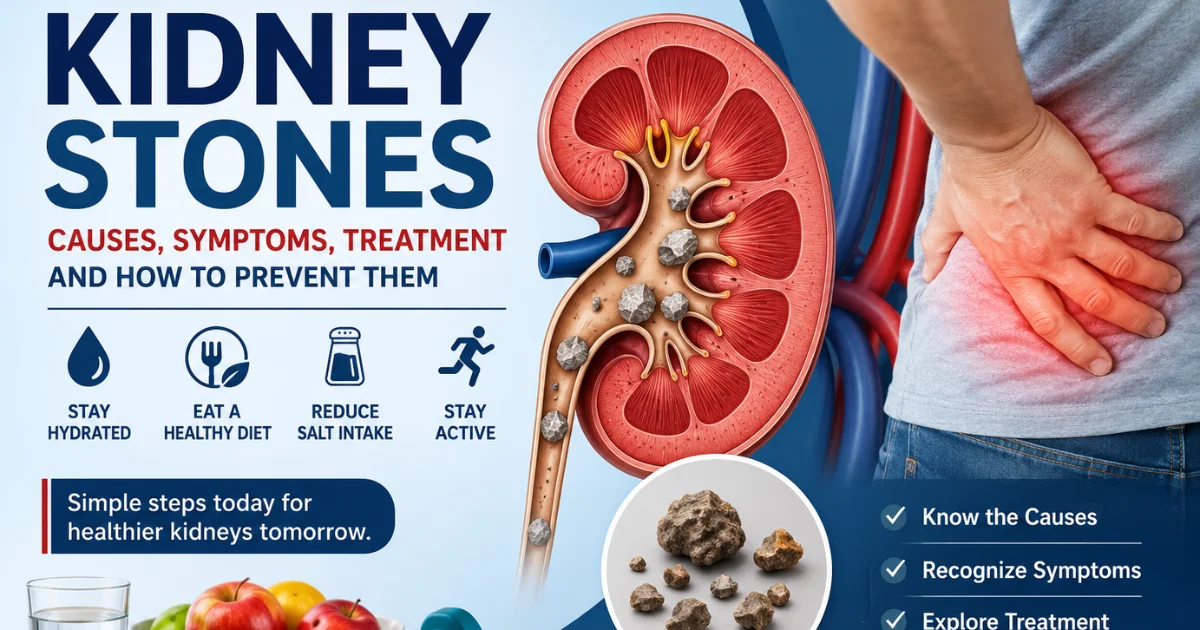
Kidney Stones Everything You Need to Know
Kidney stones are one of the most common urinary tract problems affecting millions of people worldwide. They can cause severe pain and discomfort, but the good news is that many kidney stones can be prevented through simple lifestyle changes. Understanding the causes, symptoms, and prevention methods can help protect your kidney health.
What Are Kidney Stones?
Kidney stones are hard deposits made of minerals and salts that form inside the kidneys. They develop when urine contains high levels of certain minerals, such as calcium, oxalate, and uric acid, which crystallize and stick together.
Kidney stones can range in size from tiny grains of sand to larger stones that may block the urinary tract.
Common Causes of Kidney Stones
Several factors increase the risk of developing kidney stones, including:
- Not drinking enough water (dehydration)
- Eating too much salt
- High intake of animal protein
- Excessive consumption of oxalate-rich foods
- Obesity
- Family history of kidney stones
- Certain medical conditions such as diabetes or gout
- Some medications and supplements
Symptoms of Kidney Stones
Symptoms often appear when the stone starts moving through the urinary tract.
Common symptoms include:
- Severe pain in the back or side
- Pain that spreads to the lower abdomen or groin
- Burning sensation during urination
- Blood in the urine
- Frequent urge to urinate
- Nausea and vomiting
- Fever and chills (if an infection is present)
How Are Kidney Stones Diagnosed?
Doctors may recommend:
- Urine tests
- Blood tests
- Ultrasound
- CT scan
- X-ray (in some cases)
These tests help determine the size, location, and type of kidney stone.
Treatment Options
Treatment depends on the size and type of kidney stone.
Small Kidney Stones
Most small stones pass naturally by:
- Drinking plenty of water
- Taking pain-relief medications
- Using medications that relax the urinary tract
Large Kidney Stones
Larger stones may require:
- Shock Wave Lithotripsy (SWL)
- Ureteroscopy
- Percutaneous Nephrolithotomy (PCNL)
- Surgery (rare cases)
How to Prevent Kidney Stones
Preventing kidney stones is often easier than treating them. Follow these healthy habits:
1. Drink Plenty of Water
Drink at least 2.5 to 3 liters of water every day to keep your urine diluted.
2. Reduce Salt Intake
Too much sodium increases calcium levels in urine, raising the risk of stone formation.
3. Eat a Balanced Diet
Include fruits, vegetables, whole grains, and adequate calcium from natural food sources.
4. Limit Oxalate-Rich Foods
If you’re prone to calcium oxalate stones, reduce foods like:
- Spinach
- Beetroot
- Chocolate
- Nuts
- Tea
5. Reduce Animal Protein
Limit excessive intake of red meat, fish, and poultry if recommended by your doctor.
6. Maintain a Healthy Weight
Obesity is linked to a higher risk of kidney stones.
7. Avoid Sugary Drinks
Soft drinks and sugary beverages may increase the likelihood of stone formation.
When Should You See a Doctor?
Seek immediate medical attention if you experience:
- Severe pain that doesn’t improve
- Blood in urine
- Fever with chills
- Difficulty passing urine
- Persistent vomiting
Early treatment can prevent serious complications.
Frequently Asked Questions (FAQs)
Can kidney stones go away on their own?
Yes. Small kidney stones often pass naturally with plenty of fluids and proper medical guidance.
Is drinking water enough to prevent kidney stones?
Staying well-hydrated significantly lowers the risk, but a healthy diet and lifestyle are also important.
Are kidney stones dangerous?
Most kidney stones are treatable, but untreated stones can cause infections, kidney damage, or urinary blockage.
Can kidney stones come back?
Yes. People who have had one kidney stone are at a higher risk of developing another. Following preventive measures can reduce recurrence.
Conclusion
Kidney stones can be painful, but they are often preventable. Drinking enough water, eating a balanced diet, reducing salt intake, and maintaining a healthy lifestyle are simple yet effective ways to lower your risk. If you notice symptoms such as severe pain, blood in your urine, or difficulty urinating, consult a healthcare professional promptly for evaluation and treatment.
Latest Post
- World Contraception Day 2026 Importance, Methods, Benefits and the Need for Better Awareness
- World Physiotherapy Day Importance, Benefits, and the Role of Physiotherapy in Better Health
- World Sexual Health Day Promoting Awareness, Safety, Respect, and Healthy Relationships
- Gujarat Health Machinery Placed On High Alert Following Chandipura Virus Outbreak
- International Overdose Awareness Day 2026 Meaning, Importance, Overdose Prevention & Awareness