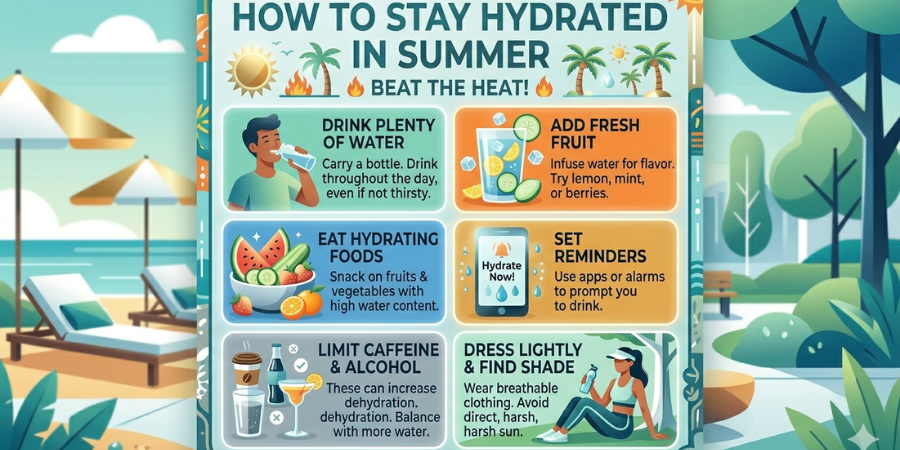
Summer brings sunshine, vacations, and outdoor fun—but it also increases the risk of dehydration. Losing too much water from your body can lead to fatigue, headaches, dizziness, and even serious health issues if ignored. The good news? Staying hydrated is simple when you follow the right habits.
In this guide, we’ll walk you through everything you need to know to stay properly hydrated during the hot summer months.
☀️ Why Hydration Is Important in Summer
During summer, your body loses more fluids through sweat. This is your body’s natural way of cooling down, but it also means you need to replenish lost fluids regularly. If you don’t, dehydration can affect your energy levels, digestion, and even brain function.
🚨 Signs of Dehydration
Before we dive into prevention, it’s important to recognize the symptoms:
- Dry mouth and lips
- Dark yellow urine
- Feeling tired or dizzy
- Headaches
- Muscle cramps
- Rapid heartbeat
If you notice these signs, your body is already asking for water.
💧 Tips to Stay Hydrated in Summer
1. Drink Water Regularly
Don’t wait until you feel thirsty. Make it a habit to sip water throughout the day. Aim for at least 8–10 glasses daily, and more if you’re active.
2. Eat Water-Rich Foods
Include fruits and vegetables with high water content in your diet, such as:
- Watermelon
- Cucumber
- Oranges
- Strawberries
- Coconut water
These not only hydrate you but also provide essential nutrients.
3. Avoid Excess Caffeine and Sugary Drinks
Drinks like coffee, tea, and sodas can actually make you lose more fluids. Try to limit them and replace with healthier options like lemon water or herbal drinks.
4. Carry a Water Bottle
Always keep a reusable water bottle with you. This simple habit reminds you to drink more often, especially when you’re outdoors.
5. Stay Cool
Avoid going out during peak heat hours (12 PM – 4 PM). Wear light, breathable clothing and stay in shaded or air-conditioned areas whenever possible.
6. Drink Electrolytes When Needed
If you sweat heavily, plain water may not be enough. Oral rehydration solutions (ORS), coconut water, or electrolyte drinks can help restore lost minerals.
7. Monitor Your Urine Color
A simple way to check hydration is by looking at your urine. Pale yellow means you’re well hydrated, while dark yellow indicates you need more fluids.
🏃♂️ Hydration Tips for Active People
If you exercise or work outdoors:
- Drink water before, during, and after activity
- Take breaks in shaded areas
- Wear breathable clothing
- Increase your fluid intake based on sweat levels
⚠️ When to Seek Medical Help
Severe dehydration can be dangerous. Seek medical attention if you experience:
- Extreme dizziness
- Confusion
- Rapid breathing
- No urination for several hours
- Fainting
✅ Final Thoughts
Staying hydrated in summer isn’t just about drinking water—it’s about maintaining a balance of fluids, electrolytes, and healthy habits. By making small changes to your daily routine, you can enjoy the summer season without risking your health.
❓ FAQs
1. How much water should I drink in summer?
Most people need 2–3 liters per day, but this can vary depending on activity level and weather.
2. Is coconut water better than regular water?
Coconut water is great for hydration and contains natural electrolytes, making it a good option after sweating.
3. Can fruits replace drinking water?
Fruits help, but they shouldn’t completely replace water intake.
4. What are the best drinks for hydration?
Water, coconut water, lemon water, and ORS solutions are the best choices.
Latest Post
- July 23 World Sjögren’s Day 2026 Understanding the “Invisible” Autoimmune Disease
- World Brain Day 2026 History, Importance, Theme, and Tips for a Healthy Brain
- M Solvin Cough Syrup Uses, Benefits, Dosage, Side Effects, Price & Complete Guide
- Chronic Disease Awareness Day Why Awareness, Prevention, and Early Detection Matter
- National Doctors’ Day 2026 History, Significance, Theme, Celebration & Inspiring Facts