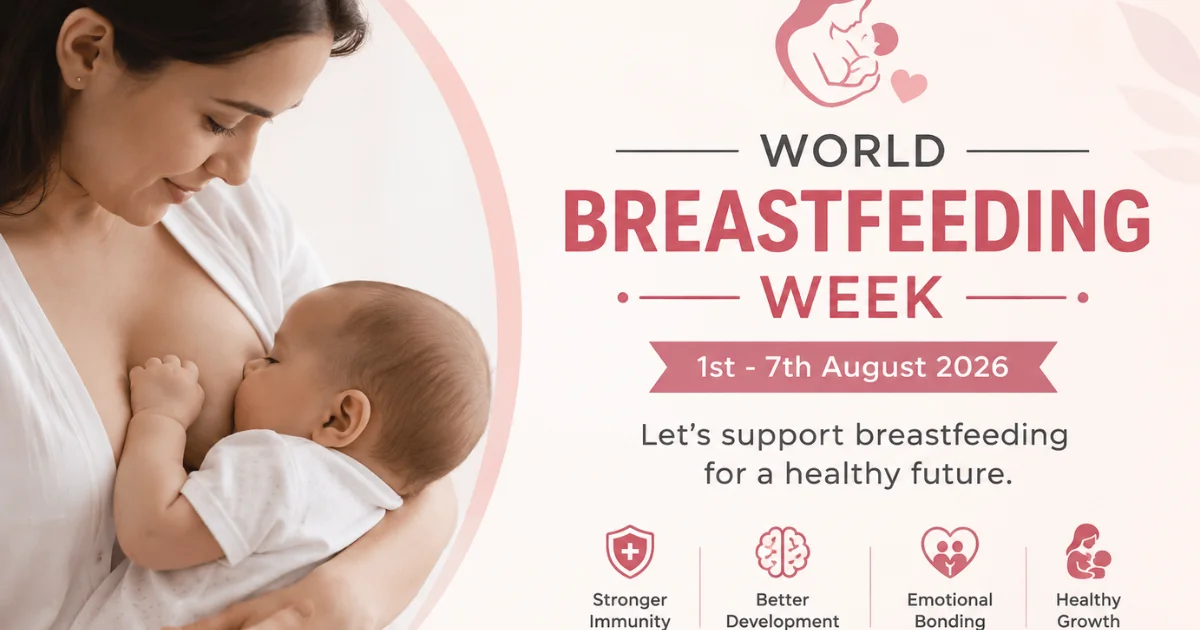
World Breastfeeding Week 2026
Every year, World Breastfeeding Week is observed from August 1 to August 7 to raise awareness about the importance of breastfeeding and encourage support for mothers and babies worldwide. Organized by the World Alliance for Breastfeeding Action (WABA) with support from global health organizations, the campaign highlights breastfeeding as one of the most effective ways to ensure a child’s healthy growth and development.
Breastfeeding is more than just feeding a baby—it provides essential nutrients, strengthens immunity, promotes emotional bonding, and supports the long-term health of both mother and child. During World Breastfeeding Week 2026, healthcare professionals, hospitals, governments, and communities come together to educate families about the benefits of breastfeeding and the importance of creating breastfeeding-friendly environments.
What is World Breastfeeding Week?
World Breastfeeding Week is an annual global campaign celebrated from August 1–7. The event aims to:
- Promote exclusive breastfeeding for the first six months.
- Encourage continued breastfeeding along with complementary foods until at least two years of age.
- Support breastfeeding mothers in workplaces and public spaces.
- Raise awareness about maternal and infant health.
- Improve breastfeeding education and healthcare support.
Millions of people participate through awareness campaigns, health seminars, workshops, hospital events, and social media activities.
Why is Breastfeeding Important?
Breast milk is often called a baby’s first natural vaccine because it contains antibodies, vitamins, minerals, enzymes, and nutrients specifically designed for a baby’s needs.
Exclusive breastfeeding for the first six months provides babies with everything they need for healthy growth without requiring water or other foods.
Breastfeeding also creates a strong emotional bond between mother and child while supporting healthy physical and mental development.
Benefits of Breastfeeding for Babies
1. Stronger Immunity
Breast milk contains antibodies that protect babies from infections such as:
- Diarrhea
- Pneumonia
- Ear infections
- Respiratory illnesses
- Urinary tract infections
Breastfed babies generally have fewer hospital visits during infancy.
2. Complete Nutrition
Breast milk provides:
- Protein
- Healthy fats
- Vitamins
- Minerals
- Carbohydrates
- Water
Its composition naturally changes as the baby grows to meet changing nutritional needs.
3. Better Brain Development
Research suggests breastfeeding supports cognitive development and may contribute to improved learning abilities and higher IQ scores later in life.
4. Healthy Weight
Breastfeeding helps regulate appetite naturally and may reduce the risk of childhood obesity.
5. Lower Risk of Allergies
Exclusive breastfeeding can reduce the chances of developing:
- Asthma
- Eczema
- Food allergies
especially in children with a family history of allergies.
Benefits of Breastfeeding for Mothers
Breastfeeding is equally beneficial for mothers.
Faster Recovery After Delivery
Breastfeeding stimulates oxytocin release, helping the uterus return to its normal size and reducing postpartum bleeding.
Burns Extra Calories
Mothers may burn around 400–600 calories daily, which can assist healthy postpartum weight management.
Reduces Cancer Risk
Long-term breastfeeding is associated with a lower risk of:
- Breast cancer
- Ovarian cancer
Supports Mental Health
Breastfeeding promotes bonding and may reduce the risk of postpartum depression in some mothers by releasing hormones that encourage relaxation and emotional connection.
Saves Money
Breastfeeding eliminates the cost of infant formula, bottles, and feeding equipment while reducing healthcare expenses through better infant health.
WHO Recommendations
The World Health Organization recommends:
- Start breastfeeding within one hour after birth
- Exclusive breastfeeding for 6 months
- Continue breastfeeding up to 2 years or beyond
- Introduce nutritious complementary foods after six months while continuing breastfeeding
These recommendations support optimal growth, development, and health.
Common Breastfeeding Challenges
Many mothers face difficulties during breastfeeding, especially during the first few weeks.
Common challenges include:
- Poor latch
- Sore nipples
- Low milk supply
- Engorged breasts
- Mastitis
- Baby refusing to feed
Most breastfeeding problems can be resolved with timely guidance from doctors, nurses, or lactation consultants.
Tips for Successful Breastfeeding
Feed on Demand
Feed your baby whenever they show hunger cues rather than following a strict schedule.
Ensure Proper Latch
A good latch helps prevent nipple pain and allows the baby to feed effectively.
Stay Hydrated
Drink plenty of water and eat a balanced diet rich in proteins, fruits, vegetables, and whole grains.
Get Enough Rest
Adequate sleep and emotional support can positively influence breastfeeding.
Avoid Smoking and Alcohol
These substances may affect breast milk and the baby’s health.
Seek Help Early
If you experience pain, low milk supply, or feeding concerns, consult a healthcare professional promptly.
Role of Family and Society
Breastfeeding is not only a mother’s responsibility. Families, employers, healthcare providers, and communities all play an important role by:
- Offering emotional support.
- Sharing household responsibilities.
- Providing breastfeeding-friendly workplaces.
- Allowing adequate maternity leave.
- Creating comfortable public breastfeeding spaces.
- Encouraging fathers to actively support new mothers.
A supportive environment significantly improves breastfeeding success.
World Breastfeeding Week 2026 Theme
Each year, World Breastfeeding Week focuses on a specific theme chosen by WABA to strengthen awareness and advocacy. The campaign emphasizes improving support systems for breastfeeding mothers through healthcare services, workplaces, families, and communities while promoting sustainable investments in maternal and child health.
Myths About Breastfeeding
Myth: Formula milk is the same as breast milk.
Fact: Breast milk contains living antibodies and immune factors that formula cannot fully replicate.
Myth: Small breasts produce less milk.
Fact: Breast size does not determine milk production.
Myth: Babies need water before six months.
Fact: Breast milk provides enough water even in hot climates for healthy, exclusively breastfed infants.
Myth: Breastfeeding should stop when the mother has a mild cold.
Fact: In many common illnesses, breastfeeding can continue while following medical advice, and it may even pass protective antibodies to the baby.
How Hospitals Can Promote Breastfeeding
Healthcare institutions play a crucial role by:
- Initiating breastfeeding soon after birth.
- Providing lactation counseling.
- Training healthcare staff.
- Encouraging rooming-in (keeping mother and baby together).
- Avoiding unnecessary formula supplementation unless medically indicated.
- Educating families before discharge.
Conclusion
World Breastfeeding Week reminds us that breastfeeding is one of the simplest and most effective ways to improve maternal and child health. It provides ideal nutrition, strengthens immunity, supports healthy development, and creates a lifelong bond between mother and baby. By supporting breastfeeding mothers at home, in healthcare settings, at work, and in society, we can give every child the healthiest possible start in life.
This World Breastfeeding Week 2026, let us spread awareness, encourage breastfeeding-friendly communities, and support every mother on her breastfeeding journey.
Frequently Asked Questions (FAQs)
Q1. When is World Breastfeeding Week celebrated?
It is observed every year from August 1 to August 7.
Q2. How long should a baby be exclusively breastfed?
Health authorities recommend exclusive breastfeeding for the first six months.
Q3. Can working mothers continue breastfeeding?
Yes. Expressing and safely storing breast milk, along with workplace support, can help mothers continue breastfeeding after returning to work.
Q4. Is breast milk enough during summer?
Yes. For healthy babies under six months who are exclusively breastfed, breast milk generally provides all the hydration they need.
Q5. Why is breastfeeding called a baby’s first vaccine?
Because it contains antibodies and immune-protective factors that help protect babies from many infections and illnesses.
Latest Post
- World Contraception Day 2026 Importance, Methods, Benefits and the Need for Better Awareness
- World Physiotherapy Day Importance, Benefits, and the Role of Physiotherapy in Better Health
- World Sexual Health Day Promoting Awareness, Safety, Respect, and Healthy Relationships
- Gujarat Health Machinery Placed On High Alert Following Chandipura Virus Outbreak
- International Overdose Awareness Day 2026 Meaning, Importance, Overdose Prevention & Awareness