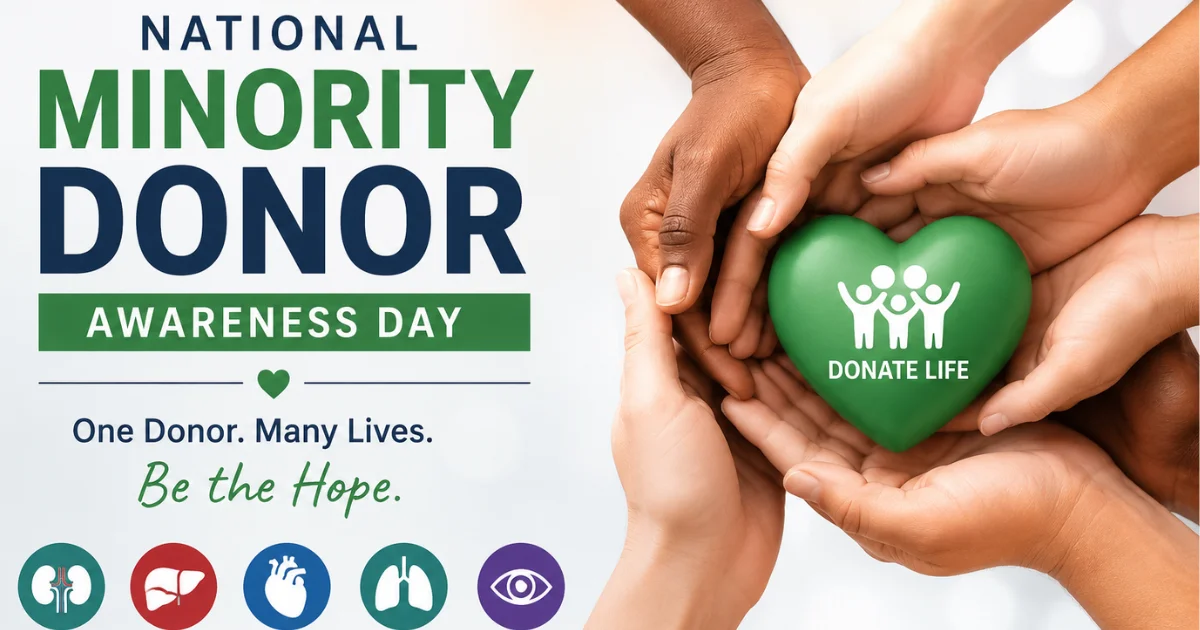
Every year, National Minority Donor Awareness Day is observed to encourage people from diverse ethnic and minority communities to register as organ, eye, and tissue donors. The day highlights the urgent need for more donors from minority populations, as patients often have a better chance of finding compatible organ donors from individuals with similar genetic backgrounds.
Millions of people worldwide suffer from life-threatening diseases that require organ transplantation. Unfortunately, the demand for organs continues to exceed the available supply. By raising awareness and encouraging donor registration, National Minority Donor Awareness Day helps bridge this gap and offers hope to patients waiting for a second chance at life.
In this article, we’ll explore the history, significance, benefits, myths, and ways you can support National Minority Donor Awareness Day.
What Is National Minority Donor Awareness Day?
National Minority Donor Awareness Day is dedicated to educating communities about the importance of organ, eye, and tissue donation, especially among racial and ethnic minority populations.
The observance focuses on:
- Increasing awareness about organ donation
- Encouraging donor registration
- Educating families about donation decisions
- Addressing myths and misconceptions
- Promoting health equity in transplantation
Many patients from minority backgrounds experience longer waiting times because of the shortage of compatible donors. Increasing donor registrations can significantly improve transplant outcomes.
Why Minority Organ Donation Is Important
Successful organ transplantation depends on several medical factors, including tissue compatibility. While a perfect match isn’t always necessary, patients often have a greater chance of finding suitable donors within similar ethnic or genetic backgrounds.
Increasing donor registrations among minority communities can help:
- Reduce transplant waiting times
- Improve compatibility for recipients
- Increase transplant success rates
- Save thousands of lives each year
- Strengthen community awareness about healthcare
Every registered donor has the potential to save multiple lives.
History of National Minority Donor Awareness Day
National Minority Donor Awareness Day was established to recognize disparities in organ donation and transplantation among minority populations.
Healthcare organizations and transplant professionals observed that patients from diverse racial and ethnic backgrounds often waited longer for life-saving transplants due to limited donor availability.
Since its introduction, the awareness day has focused on:
- Community education
- Public awareness campaigns
- Health fairs
- Blood and organ donation drives
- Educational seminars
- Family discussions about donation
The observance continues to inspire individuals to become registered donors and advocates within their communities.
Why Organ Donation Is Needed
Thousands of patients wait every day for organs such as:
- Kidneys
- Liver
- Heart
- Lungs
- Pancreas
- Intestines
In addition to organs, donated tissues can improve the lives of burn victims and patients requiring reconstructive surgery, while donated corneas can restore sight to individuals with vision loss.
One donor can positively impact many lives through organ, tissue, and eye donation.
Common Myths About Organ Donation
Myth 1: Doctors won’t try to save me if I’m a donor.
Fact: Medical teams always prioritize saving a patient’s life. Organ donation is only considered after every life-saving effort has failed and strict medical criteria are met.
Myth 2: I’m too old to donate.
Fact: There is no fixed age limit for organ donation. Medical professionals evaluate each donor individually based on organ health.
Myth 3: People with medical conditions cannot donate.
Fact: Many people with chronic illnesses can still donate certain organs or tissues. Eligibility is determined at the time of donation.
Myth 4: Organ donation goes against most religions.
Fact: Most major religions support organ donation as an act of generosity, compassion, and saving lives. Individuals should consult their faith leaders if they have questions.
Myth 5: Rich or famous people receive organs first.
Fact: Organ allocation is based on medical urgency, compatibility, waiting time, and other clinical criteria—not wealth or social status.
Benefits of Organ Donation
Organ donation provides hope to patients and their families while strengthening healthcare systems.
Some key benefits include:
- Saving multiple lives
- Restoring vision through corneal donation
- Helping burn victims with skin grafts
- Improving mobility with bone and tissue donation
- Advancing medical education and research (where permitted)
- Inspiring communities to support life-saving healthcare initiatives
How You Can Support National Minority Donor Awareness Day
There are many meaningful ways to participate:
Register as an Organ Donor
Sign up through your country’s official organ donation registry if available.
Talk to Your Family
Share your decision with your loved ones so they understand your wishes.
Educate Others
Use social media, schools, workplaces, or community events to spread accurate information about organ donation.
Volunteer
Support hospitals, transplant organizations, or awareness campaigns in your community.
Donate Blood
Blood donation also plays a vital role in saving lives and complements broader healthcare initiatives.
Health Equity and Organ Donation
Health equity means ensuring everyone has equal access to healthcare services, including transplantation.
Increasing donor registrations across diverse communities helps reduce disparities by:
- Expanding donor availability
- Improving transplant access
- Encouraging culturally sensitive education
- Building trust between healthcare providers and communities
Awareness campaigns can make a significant difference when communities receive accurate, culturally relevant information.
Frequently Asked Questions (FAQs)
1. What is National Minority Donor Awareness Day?
It is an awareness observance that promotes organ, eye, and tissue donation among minority communities and encourages donor registration.
2. Why are minority donors important?
Patients often have a better chance of finding compatible donors from similar ethnic backgrounds, making minority donor registration especially valuable.
3. Can one donor save multiple lives?
Yes. One organ donor can save several lives through organ transplantation and improve many others through tissue and eye donation.
4. Is there an age limit for becoming a donor?
No. Medical professionals determine donor suitability based on health and organ condition rather than age alone.
5. Can people with medical conditions still become donors?
In many cases, yes. Eligibility is assessed individually at the time of donation.
6. Does organ donation cost the donor’s family anything?
In most countries, families are not charged for the organ donation process itself, though policies vary by region.
Final Thoughts
National Minority Donor Awareness Day is a reminder that organ donation is one of the most meaningful gifts a person can give. By increasing awareness, challenging misconceptions, and encouraging donor registration, communities can help reduce transplant waiting times and improve health outcomes for countless patients.
Whether you choose to register as a donor, educate others, donate blood, or simply start a conversation with your family, every action contributes to a future where more lives can be saved. Together, we can build stronger, healthier communities through compassion, awareness, and the life-changing impact of donation.
Keywords: National Minority Donor Awareness Day, organ donation awareness, minority organ donors, tissue donation, eye donation, transplant awareness, donor registration, organ transplant, health equity, save lives.
Latest Post
- World Contraception Day 2026 Importance, Methods, Benefits and the Need for Better Awareness
- World Physiotherapy Day Importance, Benefits, and the Role of Physiotherapy in Better Health
- World Sexual Health Day Promoting Awareness, Safety, Respect, and Healthy Relationships
- Gujarat Health Machinery Placed On High Alert Following Chandipura Virus Outbreak
- International Overdose Awareness Day 2026 Meaning, Importance, Overdose Prevention & Awareness