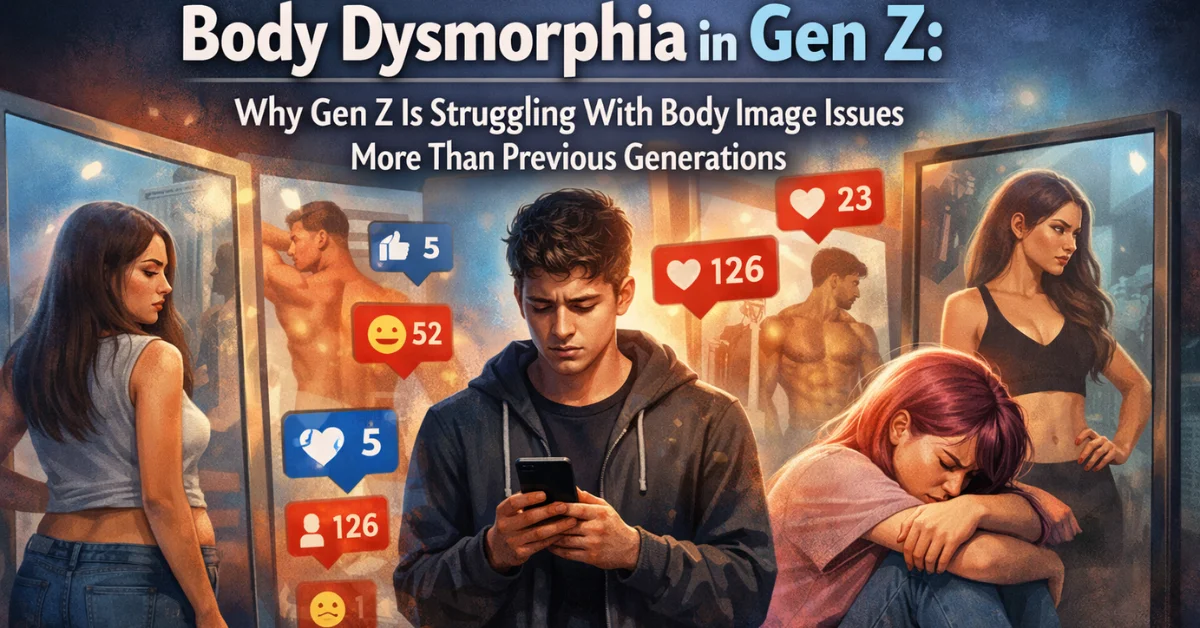
In recent years, body image issues have become a major concern among young people, especially Generation Z (Gen Z). Social media, unrealistic beauty standards, and constant online comparison have significantly affected how young individuals perceive their bodies. One of the most concerning conditions related to this issue is Body Dysmorphic Disorder (BDD), often referred to as body dysmorphia.
Gen Z, typically defined as people born between 1997 and 2012, is growing up in a digital world where appearance is constantly judged, filtered, and shared online. As a result, this generation appears to be struggling more with body image issues than previous generations.
In this article, we will explore what body dysmorphia is, why Gen Z is more vulnerable, and what can be done to improve mental health and self-image.
What Is Body Dysmorphia?
Body Dysmorphic Disorder (BDD) is a mental health condition where a person becomes excessively worried about perceived flaws in their physical appearance. These flaws are often minor or even invisible to others, but the person suffering from BDD may see them as extremely serious.
People with body dysmorphia may experience:
- Obsessive thoughts about appearance
- Frequent mirror checking or avoiding mirrors entirely
- Constant comparison with others
- Seeking reassurance about their looks
- Anxiety, depression, or social withdrawal
This condition can significantly impact daily life, confidence, relationships, and mental health.
Why Gen Z Is More Affected by Body Image Issues
There are several reasons why Gen Z appears to be facing higher levels of body image anxiety compared to previous generations.
1. Social Media Pressure
Social media platforms like Instagram, TikTok, and Snapchat play a major role in shaping beauty standards today.
Gen Z spends a significant amount of time online where they constantly see perfectly edited photos, filters, and influencer content. These images often portray unrealistic beauty standards that are difficult to achieve in real life.
As a result, many young people feel pressure to look a certain way, leading to dissatisfaction with their own appearance.
2. Filters and Photo Editing
Modern apps allow users to smooth skin, change facial structure, alter body shape, and apply beauty filters instantly. Over time, people may become used to their filtered appearance and feel uncomfortable with their natural look.
This phenomenon has even led to a new term known as “Snapchat Dysmorphia”, where individuals seek cosmetic procedures to look like their filtered photos.
3. Constant Comparison
Unlike previous generations, Gen Z has access to a global audience online. This means they are constantly comparing themselves to celebrities, influencers, and peers from around the world.
Seeing curated “perfect lives” online can create feelings of:
- Inadequacy
- Low self-esteem
- Body dissatisfaction
However, most people only share their best moments and edited images, which creates a misleading perception of reality.
4. Increased Awareness but Also Increased Pressure
Gen Z is more aware of mental health issues than older generations. While this awareness is positive, it also means that discussions around body image are more visible.
Unfortunately, exposure to conversations about beauty trends, cosmetic surgery, and appearance can sometimes increase pressure to look perfect.
5. Online Bullying and Criticism
Cyberbullying is another major factor affecting body image among young people. Negative comments about appearance can spread quickly online and deeply impact self-confidence.
Even a few harsh comments can make someone feel insecure about their looks and lead to long-term psychological stress.
Signs Someone May Be Experiencing Body Dysmorphia
Recognizing the symptoms early is important for getting help. Some common warning signs include:
- Spending excessive time worrying about appearance
- Repeatedly checking mirrors or avoiding mirrors
- Seeking cosmetic procedures frequently
- Avoiding social situations due to body concerns
- Feeling extremely anxious or depressed about looks
If these symptoms begin interfering with daily life, it may be helpful to seek professional mental health support.
How Gen Z Can Improve Body Image
Although social media and modern beauty standards can be challenging, there are ways to develop a healthier relationship with one’s body.
Limit Social Media Exposure
Reducing time spent on appearance-focused platforms can help decrease unhealthy comparisons.
Follow Positive Content
Following accounts that promote body positivity, self-acceptance, and realistic beauty standards can improve mental well-being.
Focus on Health, Not Appearance
Instead of focusing only on looks, individuals should prioritize physical health, fitness, nutrition, and mental wellness.
Seek Professional Support
Therapists and mental health professionals can help individuals understand and manage body image concerns through counseling and cognitive behavioral therapy.
Practice Self-Compassion
Everyone has unique physical traits. Learning to accept and appreciate one’s body can significantly improve confidence and emotional health.
Final Thoughts
Body dysmorphia and body image issues are becoming increasingly common among Gen Z due to the influence of social media, digital filters, and constant online comparison. While technology has many benefits, it has also created unrealistic expectations about beauty.
Understanding these challenges is the first step toward promoting healthy self-image and mental well-being. Encouraging open conversations, supporting mental health awareness, and promoting body positivity can help young people build confidence and develop a healthier relationship with their appearance.
Remember, true beauty comes from individuality, confidence, and self-acceptance, not from unrealistic online standards.
Latest Post
- World Physiotherapy Day Importance, Benefits, and the Role of Physiotherapy in Better Health
- World Sexual Health Day Promoting Awareness, Safety, Respect, and Healthy Relationships
- Gujarat Health Machinery Placed On High Alert Following Chandipura Virus Outbreak
- International Overdose Awareness Day 2026 Meaning, Importance, Overdose Prevention & Awareness
- World Mosquito Day 2026 History, Importance, Prevention Tips, and Global Awareness