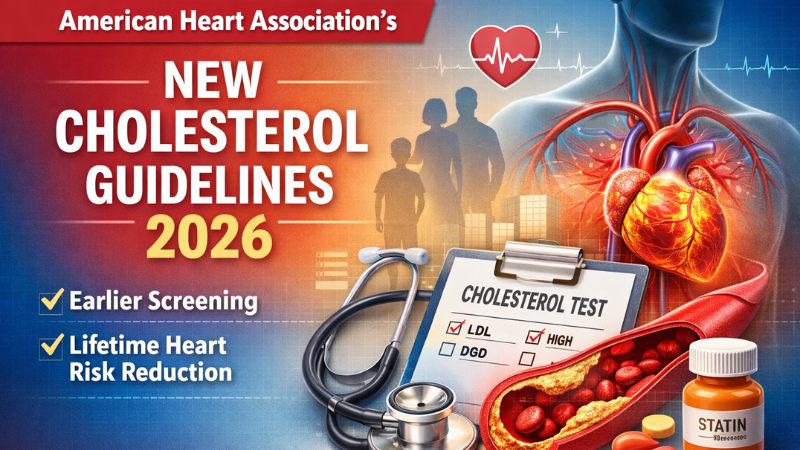
Heart disease remains one of the leading causes of death globally, prompting health experts to focus more on prevention and early detection. In response, the American Heart Association (AHA), together with the American College of Cardiology, released updated cholesterol guidelines in 2026.
The new recommendations highlight earlier cholesterol screening, improved risk assessment tools, and a stronger focus on reducing lifetime cardiovascular risk rather than waiting until problems appear later in life.
Why the New Cholesterol Guidelines Matter
High cholesterol is one of the major contributors to cardiovascular diseases such as Coronary Artery Disease, Heart Attack, and Stroke.
Experts now recognize that cholesterol-related damage can begin years before symptoms appear. Long-term exposure to high LDL (“bad cholesterol”) increases the risk of heart disease over time.
Because of this, the 2026 guidelines shift the approach from late treatment to early prevention.
Earlier Cholesterol Screening Is Now Recommended
One of the most important updates in the guidelines is the push for screening at a younger age.
Recommended Screening Timeline
- Children: Once between ages 9–11
- Young adults: Begin monitoring around age 19–20
- Adults: Repeat cholesterol tests every 4–6 years
- High-risk individuals: More frequent testing
Early screening helps detect inherited conditions such as Familial Hypercholesterolemia, which can cause extremely high cholesterol from a young age.
Detecting such conditions early allows doctors to start treatment and lifestyle interventions before serious complications occur.
A New Focus on Lifetime Heart Risk
Traditional guidelines often focused on a person’s 10-year risk of cardiovascular disease. However, the 2026 recommendations encourage doctors to also assess 30-year and lifetime risk.
This change helps identify people who may have moderate short-term risk but a high long-term risk due to factors like elevated cholesterol, genetics, or lifestyle habits.
The guidelines also introduce updated risk assessment tools to better predict cardiovascular disease in younger adults.
Special Consideration for High-Risk Populations
The new guidance highlights that some populations face higher cardiovascular risk, including South Asians, who are known to develop heart disease earlier than many other groups.
For such groups, earlier screening and proactive management may be particularly important.
Lifestyle Changes Remain the First Line of Defense
Even with advances in medications and diagnostics, the American Heart Association continues to emphasize lifestyle changes as the most effective way to control cholesterol.
Heart-Healthy Habits
- Eat a balanced diet rich in fruits, vegetables, and whole grains
- Reduce saturated fats and processed foods
- Exercise regularly (at least 150 minutes per week)
- Maintain a healthy weight
- Avoid smoking and limit alcohol consumption
These habits can significantly reduce cholesterol levels and lower the risk of cardiovascular disease.
Role of Cholesterol-Lowering Medications
For individuals with high cholesterol or elevated cardiovascular risk, doctors may recommend medications such as Statins.
Statins help lower LDL cholesterol and reduce the risk of heart attacks and strokes. According to the updated guidelines, medication may be considered earlier for people with very high LDL levels or strong family histories of heart disease.
Additional Tests for Better Risk Assessment
The new guidelines also encourage doctors to use advanced cholesterol markers and imaging tests when needed, including:
- Lipoprotein(a) testing
- Apolipoprotein B levels
- Coronary artery calcium scans
These tests can reveal hidden cardiovascular risk even when standard cholesterol levels appear normal.
The Bigger Message: Prevention Starts Early
The 2026 cholesterol guidelines emphasize a clear message: heart disease prevention should begin early in life.
By identifying cholesterol problems sooner and focusing on long-term risk, healthcare providers aim to prevent millions of future heart attacks and strokes.
Early screening, healthy lifestyle choices, and proper medical care can significantly reduce the lifetime risk of cardiovascular disease.
FAQs
1. What is the main goal of the 2026 cholesterol guidelines?
The main goal is to promote earlier screening and lifetime heart risk reduction rather than waiting until middle age to treat high cholesterol.
2. At what age should cholesterol testing begin?
Experts now recommend starting cholesterol monitoring around age 19–20, with earlier testing for children between 9–11 years.
3. Why is early cholesterol screening important?
High cholesterol can damage arteries for years before symptoms appear, increasing the risk of heart disease later in life.
4. Are lifestyle changes enough to control cholesterol?
In many cases, diet, exercise, and weight management can improve cholesterol levels. However, some individuals may require medications.
5. Who should get cholesterol tests more often?
People with diabetes, obesity, family history of heart disease, or genetic cholesterol disorders should be tested more frequently.
✅ Conclusion:
The updated cholesterol guidelines from the American Heart Association mark an important shift toward preventive cardiovascular care. By promoting early screening, improved risk assessment, and healthy lifestyle choices, the guidelines aim to reduce the global burden of heart disease and help people protect their heart health for life.
Latest Post
- World Hemophilia Day 2026: Raising Awareness, Inspiring Change
- Condom Shortage in the Indian Market: Causes, Impact, and How to Manage It
- Best Summer Skincare Routine for All Skin Types (Simple Guide)
- Cicada COVID Variant BA.3.2: Symptoms, Spread & Latest Updates (2026)
- World Chagas Disease Day – 14 April 2026: Spreading Awareness About a Neglected Disease