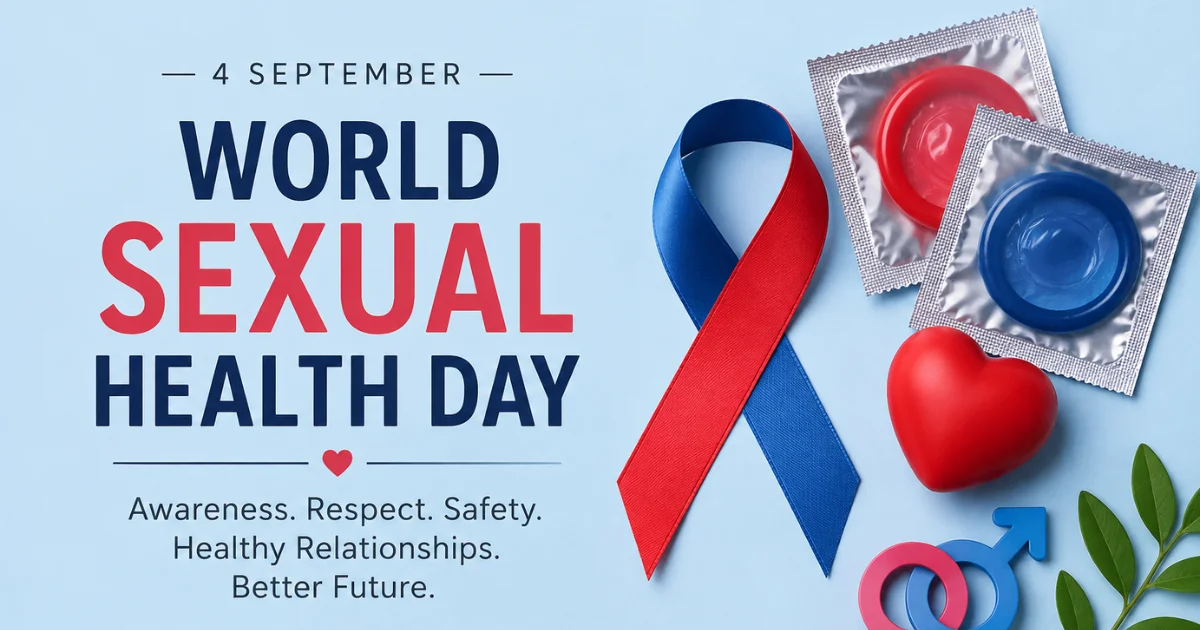
World Sexual Health Day is observed every year on September 4 to raise awareness about sexual health and encourage people to understand, discuss, and protect their sexual well-being. Sexual health is an important part of overall health, yet it is often surrounded by embarrassment, myths, stigma, and misinformation.
The day provides an opportunity to promote accurate health information, responsible choices, healthy relationships, consent, prevention of sexually transmitted infections (STIs), and access to appropriate healthcare. Sexual health is not simply about the absence of disease. It also includes physical, emotional, mental, and social well-being related to sexuality.
What Is Sexual Health?
Sexual health is a state of physical, emotional, mental, and social well-being in relation to sexuality. It involves having respectful and safe relationships, making informed decisions, understanding one’s body, and being able to access appropriate healthcare when needed.
Good sexual health includes:
- Understanding reproductive and sexual health.
- Practicing safer sex.
- Preventing sexually transmitted infections.
- Understanding consent and personal boundaries.
- Maintaining healthy relationships.
- Seeking medical advice when symptoms or concerns occur.
- Having access to reliable and confidential health information.
- Avoiding shame and stigma around sexual health discussions.
Sexual health can change throughout a person’s life and may be influenced by age, relationships, hormones, medications, lifestyle, mental well-being, and other health conditions.
Why Is World Sexual Health Day Important?
Many people hesitate to discuss sexual health because of cultural taboos, embarrassment, fear of judgment, or misinformation. As a result, important symptoms may be ignored and people may delay seeking professional healthcare.
World Sexual Health Day encourages open, respectful, and evidence-based conversations. It reminds individuals that asking questions about sexual health is a normal part of taking care of one’s health.
The day also highlights the importance of education. Reliable information can help people distinguish between facts and myths and make safer, informed decisions.
Sexually Transmitted Infections and Prevention
Sexually transmitted infections are an important aspect of sexual health. Some common STIs include chlamydia, gonorrhea, syphilis, trichomoniasis, genital herpes, human papillomavirus (HPV), hepatitis B, and HIV.
Some infections may cause symptoms such as unusual discharge, sores, genital itching, burning during urination, pelvic discomfort, or pain. However, some STIs can have no noticeable symptoms, meaning a person may not realize they have an infection.
Prevention strategies can include:
- Using condoms correctly and consistently.
- Getting appropriate STI testing.
- Discussing sexual health openly with partners.
- Avoiding sharing needles or equipment that can transmit blood-borne infections.
- Getting recommended vaccinations, including HPV and hepatitis B vaccines where appropriate.
- Seeking medical care when symptoms or exposure concerns occur.
If someone believes they may have been exposed to an STI, consulting a qualified healthcare professional is more appropriate than relying on internet advice or self-medication.
Understanding Consent
Consent is a fundamental part of a healthy sexual relationship. Consent means that everyone involved freely agrees to sexual activity.
Consent should be:
- Freely given – without pressure, threats, manipulation, or coercion.
- Informed – people should understand what they are agreeing to.
- Specific – agreeing to one activity does not automatically mean agreeing to another.
- Reversible – a person can change their mind at any time.
- Mutual – everyone involved should participate willingly.
Respecting boundaries and communicating openly can help create healthier and safer relationships.
Sexual Health and Healthy Relationships
Sexual health is closely connected with relationship health. A healthy relationship generally involves trust, communication, respect, honesty, and mutual consideration.
Partners should feel comfortable discussing boundaries, contraception, STI testing, and concerns about sexual health. No one should feel pressured to participate in sexual activity or continue an activity they do not want.
Healthy communication can also reduce misunderstandings and help partners make informed decisions together.
Reproductive Health and Contraception
Reproductive health is another important component of sexual health. People may have different reproductive goals, including preventing pregnancy, planning a pregnancy, or managing reproductive conditions.
There are several contraceptive options, including condoms, oral contraceptive pills, intrauterine devices (IUDs), implants, injections, and other methods. Different methods have different benefits, limitations, and suitability.
A healthcare professional can help an individual or couple choose an appropriate contraceptive method based on their health, preferences, reproductive plans, and medical history.
It is important to remember that most contraceptive methods do not protect against STIs. Condoms can help reduce the risk of many STIs when used correctly.
Sexual Health and Mental Well-Being
Sexual health can affect emotional and mental well-being. Concerns about sexual performance, relationships, body image, fertility, sexual orientation, or previous experiences can sometimes cause stress or anxiety.
People should not feel ashamed about seeking professional help for these concerns. Depending on the issue, support may come from a doctor, gynecologist, urologist, sexual health specialist, counselor, or mental health professional.
A supportive and non-judgmental healthcare environment can make it easier for people to discuss sensitive concerns.
Common Sexual Health Myths
Misinformation is one of the major barriers to good sexual health. Some commonly believed claims may be inaccurate or misleading.
For example, having no symptoms does not necessarily mean that a person cannot have an STI. Similarly, sexual health problems are not always caused by poor hygiene or personal failure. Conditions affecting sexual or reproductive health can have many causes, including infections, hormonal changes, medications, chronic illnesses, stress, and other medical factors.
People should avoid diagnosing themselves based solely on social media posts, advertisements, or unverified websites.
When Should You See a Doctor?
Professional medical advice may be important if a person experiences:
- Unusual genital discharge.
- Genital sores, ulcers, or blisters.
- Persistent itching or irritation.
- Pain or burning during urination.
- Pelvic or genital pain.
- Unexplained bleeding.
- Concerns about erectile function or ejaculation.
- Pain during sexual activity.
- Fertility concerns.
- Possible exposure to an STI.
- Concerns about contraception or pregnancy.
Early medical evaluation can help identify the underlying cause and guide appropriate treatment.
How Can We Promote Better Sexual Health?
Improving sexual health requires more than individual action. Families, schools, healthcare professionals, communities, and governments all have roles to play.
We can promote better sexual health by:
- Encouraging age-appropriate and evidence-based health education.
- Making reliable sexual health information easier to access.
- Reducing shame and stigma around seeking medical care.
- Encouraging appropriate STI testing and prevention.
- Promoting respectful relationships and consent.
- Improving access to reproductive and sexual healthcare.
- Correcting misinformation with reliable medical information.
- Creating confidential and non-judgmental healthcare environments.
World Sexual Health Day 2026
World Sexual Health Day 2026 will be observed on September 4, 2026. It is an opportunity to remind people that sexual health deserves the same attention and respect as other areas of health.
This year’s awareness efforts can focus on encouraging informed choices, reducing stigma, promoting safer sexual practices, supporting healthy relationships, and helping people feel comfortable seeking professional healthcare when they need it.
Final Thoughts
World Sexual Health Day is an important reminder that sexual health is an essential component of overall well-being. Everyone deserves access to accurate information, respectful relationships, appropriate healthcare, and the ability to make informed decisions about their body and reproductive health.
Talking about sexual health should not be a source of shame. Open, respectful, and medically accurate conversations can help prevent infections, reduce misinformation, improve relationships, and encourage people to seek healthcare earlier.
On September 4, World Sexual Health Day provides an opportunity to replace myths with facts, stigma with understanding, and silence with responsible health conversations.
Remember: Good sexual health starts with awareness, respect, communication, consent, prevention, and timely professional care.
Latest Post
- World Contraception Day 2026 Importance, Methods, Benefits and the Need for Better Awareness
- World Physiotherapy Day Importance, Benefits, and the Role of Physiotherapy in Better Health
- World Sexual Health Day Promoting Awareness, Safety, Respect, and Healthy Relationships
- Gujarat Health Machinery Placed On High Alert Following Chandipura Virus Outbreak
- International Overdose Awareness Day 2026 Meaning, Importance, Overdose Prevention & Awareness