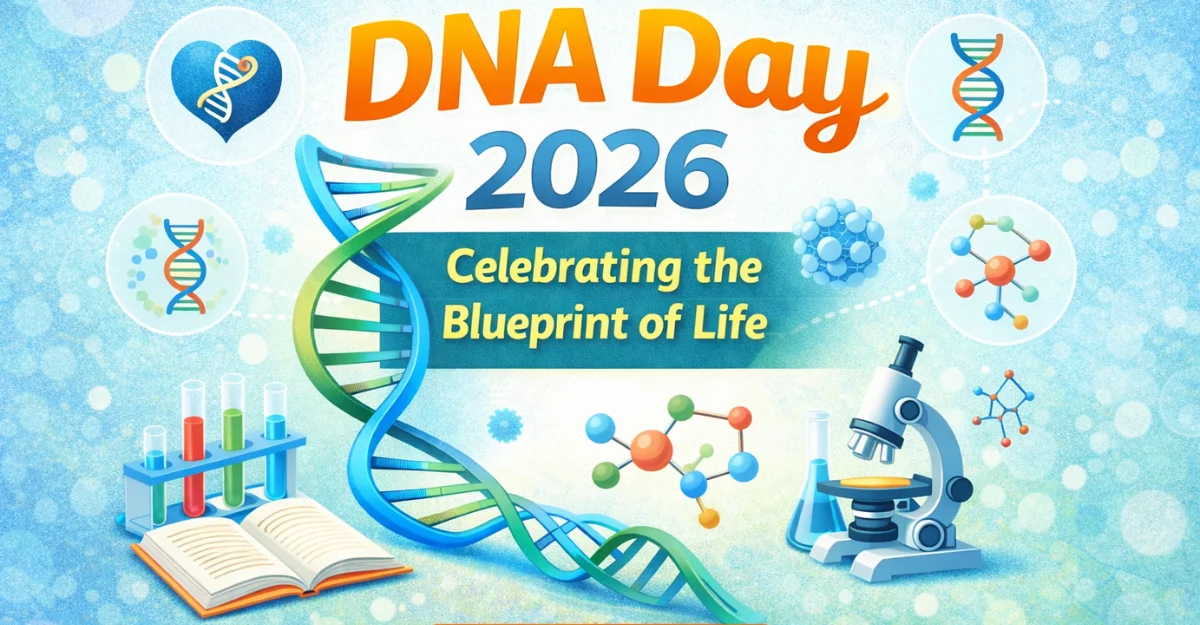
Every year on April 25, the world celebrates DNA Day, a day dedicated to one of the most important scientific discoveries in human history—the structure of DNA.
In 2026, DNA Day continues to inspire curiosity, innovation, and awareness about genetics and its impact on our lives.
What is DNA Day?
DNA Day marks two major scientific milestones:
- The discovery of the double helix structure of DNA in 1953
- The completion of the Human Genome Project in 2003
This day honors the breakthroughs that revolutionized biology, medicine, and biotechnology.
Why is DNA Important?
DNA (Deoxyribonucleic Acid) is the genetic material found in all living organisms. It carries the instructions that determine:
- Physical traits (like eye color, height)
- Biological functions
- Disease susceptibility
👉 In simple terms, DNA is the blueprint of life.
History Behind DNA Day
DNA Day was officially recognized to celebrate:
1. Discovery of DNA Structure (1953)
Scientists revealed the famous double helix model, which explained how genetic information is stored and passed on.
2. Human Genome Project (2003)
This global scientific effort successfully mapped all human genes, opening doors to modern medicine and genetic research.
Theme of DNA Day 2026
While themes may vary each year, DNA Day 2026 focuses on:
👉 “Genetics for a Healthier Future”
This highlights the growing role of genetics in:
- Personalized medicine
- Disease prevention
- Advanced diagnostics
Importance of DNA Day in Modern Life
DNA is no longer limited to laboratories—it plays a major role in everyday life.
1. Medical Advancements
- Early detection of diseases
- Personalized treatments
- Genetic testing
2. Forensic Science
- Crime investigations
- Identity verification
3. Agriculture
- Improved crop quality
- Disease-resistant plants
4. Ancestry & Heritage
- DNA testing helps trace family origins
How DNA Day is Celebrated
People around the world celebrate DNA Day in various ways:
- Science seminars and workshops
- School competitions and quizzes
- Awareness campaigns
- Online webinars and discussions
Students, researchers, and educators actively participate to spread knowledge about genetics.
Interesting Facts About DNA
- Every human shares 99.9% of DNA with others
- DNA in one cell is about 2 meters long when stretched
- Humans have around 20,000–25,000 genes
- You share about 60% DNA with bananas 😄
Future of DNA & Genetics
The future of DNA research is incredibly exciting:
- Gene editing technologies like CRISPR
- Personalized healthcare
- Cure for genetic disorders
- Advanced biotechnology innovations
👉 DNA science is shaping the future of humanity.
FAQs About DNA Day
1. When is DNA Day celebrated?
DNA Day is celebrated on April 25 every year.
2. Why is DNA Day important?
It highlights major scientific discoveries and promotes awareness about genetics.
3. Who can celebrate DNA Day?
Students, teachers, scientists, and anyone interested in science.
4. What is the Human Genome Project?
It was a global project that mapped all human genes.
Final Thoughts
DNA Day 2026 is not just a celebration of science—it’s a reminder of how far humanity has come in understanding life itself.
👉 From solving crimes to curing diseases, DNA continues to transform the world.
Let’s celebrate the science that makes us who we are!
Latest Post
- World Contraception Day 2026 Importance, Methods, Benefits and the Need for Better Awareness
- World Physiotherapy Day Importance, Benefits, and the Role of Physiotherapy in Better Health
- World Sexual Health Day Promoting Awareness, Safety, Respect, and Healthy Relationships
- Gujarat Health Machinery Placed On High Alert Following Chandipura Virus Outbreak
- International Overdose Awareness Day 2026 Meaning, Importance, Overdose Prevention & Awareness