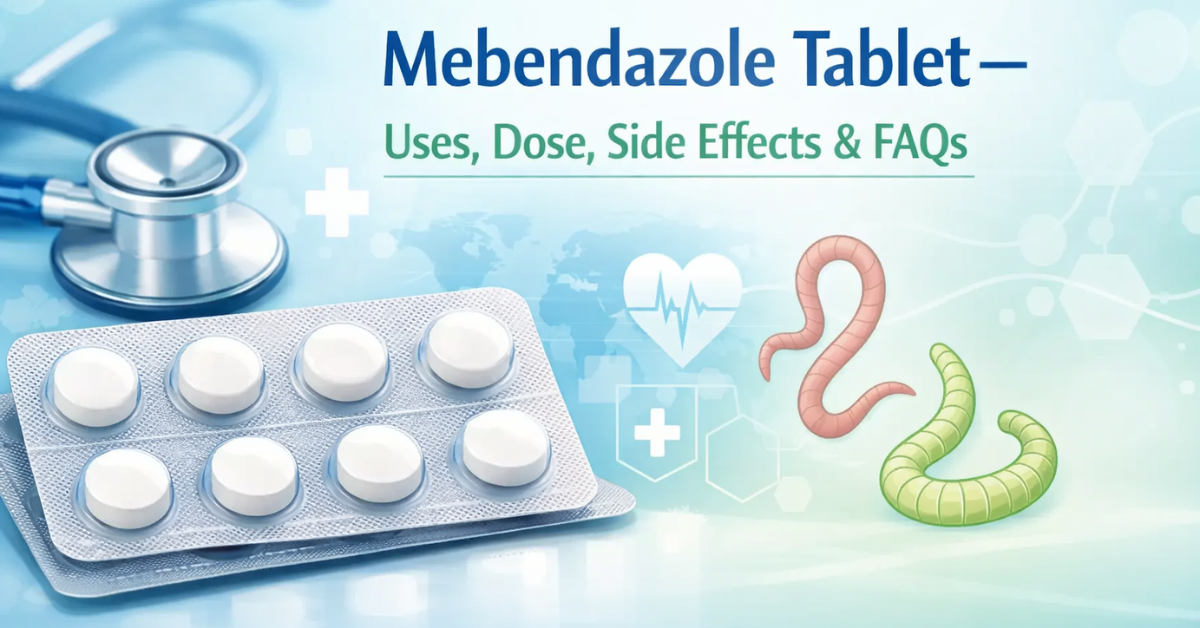
Mebendazole tablet is a widely used anthelmintic medication, primarily prescribed to treat infections caused by intestinal worms Mebendazole tablet is an anthelmintic (an-thel-MIN-tik) or anti-worm medication. It prevents newly hatched insect larvae (worms) from growing or multiplying in your body.
These infections are common worldwide, particularly in areas with poor sanitation. Mebendazole tablet works by inhibiting the growth of worms and eventually killing them, providing relief from symptoms like abdominal pain, diarrhea, and nutritional deficiencies caused by parasitic infestations.
Uses of Mebendazole Tablet
Mebendazole tablet is effective against a variety of intestinal parasites. Some of its primary uses include:
- Roundworm (Ascaris lumbricoides) – Treats infections caused by roundworms that can cause abdominal discomfort, malnutrition, and growth problems in children.
- Hookworm (Ancylostoma duodenale, Necator americanus) – Eliminates hookworm infections, which can lead to anemia and weakness due to blood loss.
- Pinworm (Enterobius vermicularis) – Common in children, causing itching around the anal region.
- Whipworm (Trichuris trichiura) – Helps treat whipworm infections, which can cause diarrhea, abdominal pain, and rectal prolapse in severe cases.
- Other intestinal parasites – Occasionally prescribed for other worm infections as advised by a doctor.
Mebendazole tablet is not effective against infections outside the intestines, such as tissue-dwelling worms.
Recommended Dosage
The dosage of Mebendazole tablet depends on the type of worm infection and the patient’s age:
- Adults and children over 2 years:
- For roundworm, whipworm, and hookworm infections: 100 mg twice daily for 3 days or a single 500 mg dose (as prescribed).
- For pinworm infections: 100 mg as a single dose, repeated after 2 weeks if necessary.
- Children under 2 years:
- Usually, the dosage should be determined by a pediatrician.
Note: Always take Mebendazole tablet with food to improve absorption. Do not self-medicate, and consult a doctor before starting treatment, especially in pregnant women.
Side Effects of Mebendazole tablet
Mebendazole tablet is generally safe when taken as prescribed. However, some people may experience mild side effects, including:
- Nausea or vomiting
- Abdominal pain or cramps
- Diarrhea
- Headache
- Dizziness
Rarely, severe allergic reactions, such as rash, itching, or swelling of the face and throat, may occur. If any severe side effects are observed, seek immediate medical attention.
Price of Mebendazole Tablet
The price of Mebendazole may vary depending on the brand and location. On average:
- Mebendazole 100 mg tablet (strip of 6 tablets): ₹20–₹50
- Mebendazole 500 mg chewable tablet (strip of 4 tablets): ₹40–₹80
Generic versions are usually more affordable and equally effective.
Precautions
- Consult your doctor if you are pregnant, breastfeeding, or have allergies to medications.
- Good hygiene practices are essential to prevent reinfection, especially in households with multiple members.
FAQs About Mebendazole Tablet
1. Can Mebendazole tablet be taken during pregnancy?
- It is generally not recommended during the first trimester. Pregnant women should consult their doctor before taking it.
2. How long does it take to work?
- Most worm infections respond within a few days, but some may require repeated doses.
3. Can I take Mebendazole with other medicines?
- Mebendazole may interact with certain medications. Always inform your doctor about other drugs you are taking.
4. Is it safe for children?
- Yes, it is safe for children over 2 years, but dosage must be carefully followed.
5. Are there any dietary restrictions?
- There are no major restrictions, but taking it with a fatty meal may improve absorption.
6. Can worms return after treatment?
- Re-infection is possible if hygiene practices are not maintained. Washing hands, properly cleaning food, and maintaining sanitation are essential.
Conclusion
Mebendazole is a trusted and effective medication for treating intestinal worm infections in both adults and children. While generally safe, it is important to follow the prescribed dosage and consult a doctor for special cases like pregnancy or severe infections. Maintaining proper hygiene and sanitation can prevent recurrence, ensuring long-term relief and better health.
Latest Post
- World Irritable Bowel Syndrome (IBS) Day 2026: Understanding Symptoms, Causes, and Management
- World Liver Day 2026: Causes, Symptoms, and Tips for Healthy Liver
- World Hemophilia Day 2026: Raising Awareness, Inspiring Change
- Condom Shortage in the Indian Market: Causes, Impact, and How to Manage It
- Best Summer Skincare Routine for All Skin Types (Simple Guide)