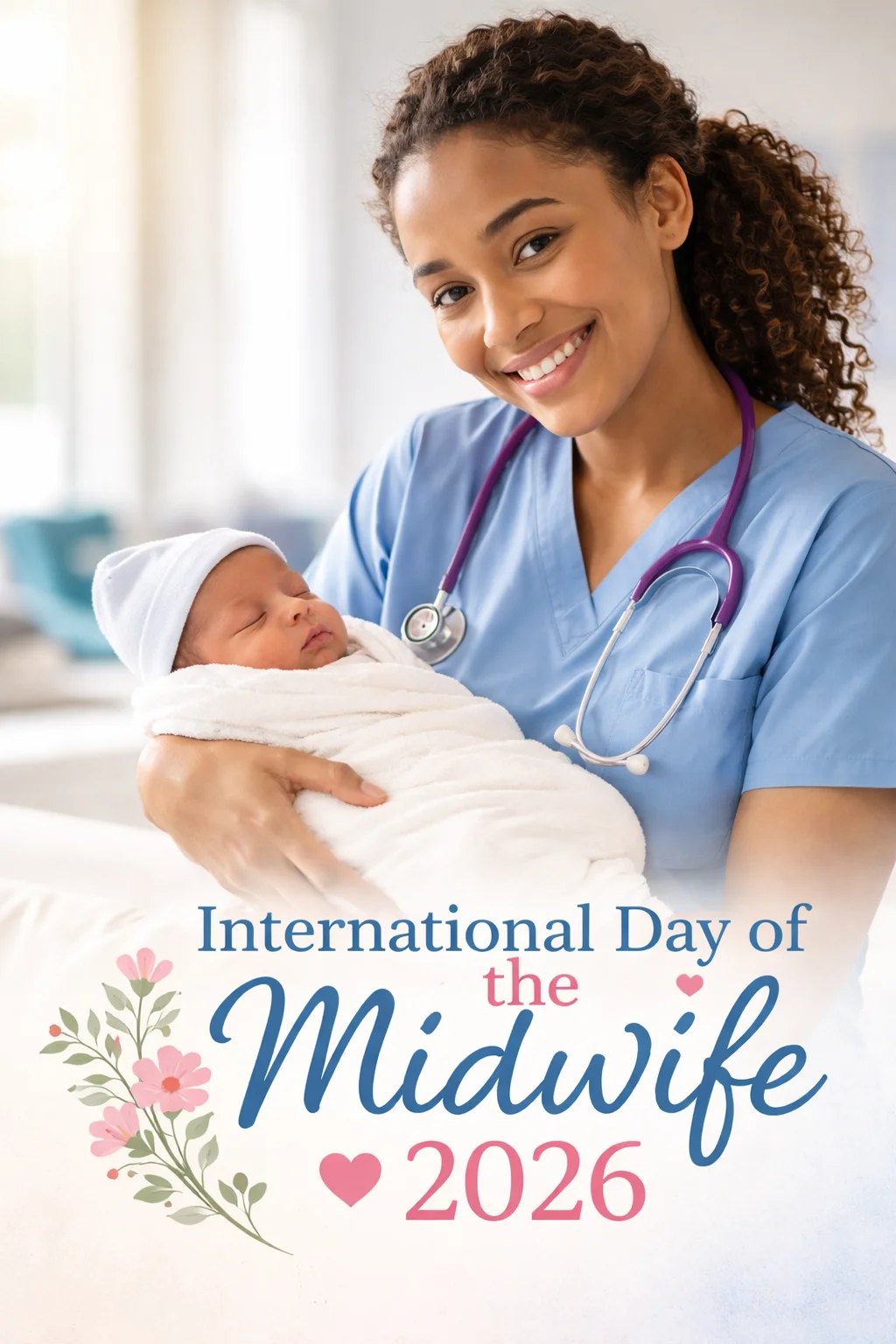
Every year on May 5th, the world comes together to celebrate International Day of the Midwife, a global event dedicated to recognizing the vital contributions of midwives in ensuring safe pregnancies and childbirth. In 2026, this day continues to shine a spotlight on the dedication, compassion, and expertise of midwives who play a crucial role in saving lives and supporting families.
As maternal health remains a global priority, this year’s observance emphasizes the need to strengthen midwifery services and ensure that every woman has access to skilled care during pregnancy and delivery.
What is International Day of the Midwife?
International Day of the Midwife (IDM) was first observed in 1992 by the International Confederation of Midwives (ICM). Since then, it has grown into a worldwide campaign celebrated in more than 100 countries.
The purpose of this day is simple yet powerful: to raise awareness about the importance of midwives and advocate for better maternal and newborn healthcare services. Each year, a specific theme highlights pressing issues related to maternal health, such as access to care, equity, and workforce development.
Why International Day of the Midwife 2026 Matters
In 2026, the importance of midwives is greater than ever. Despite advances in healthcare, many regions still face high maternal and infant mortality rates. According to global health organizations, most of these deaths are preventable with proper care—and midwives are at the heart of that solution.
Midwives are not just healthcare providers; they are educators, counselors, and advocates for women’s health. Their presence ensures that pregnancies are monitored, risks are identified early, and deliveries are handled safely.
The Role of Midwives in Modern Healthcare
Midwives provide comprehensive care throughout the maternity journey. Their responsibilities include:
1. Antenatal Care
Midwives monitor the health of both mother and baby during pregnancy. They provide guidance on nutrition, lifestyle, and prenatal tests.
2. Skilled Birth Assistance
During labor and delivery, midwives ensure a safe and supportive environment. They are trained to handle normal deliveries and identify complications that require medical intervention.
3. Postnatal Care
After childbirth, midwives support mothers in recovery and provide care for newborns, including breastfeeding guidance and health monitoring.
4. Reproductive Health Services
Midwives also educate women about family planning, contraception, and overall reproductive health.
Challenges Faced by Midwives in 2026
Despite their critical role, midwives continue to face several challenges worldwide:
- Shortage of trained midwives, especially in rural and underserved areas
- Limited healthcare infrastructure in low-resource settings
- Lack of recognition and fair compensation
- High workload and burnout
These issues highlight the urgent need for governments and healthcare systems to invest in midwifery education and workforce expansion.
The Impact of Midwives on Maternal and Newborn Health
Studies have shown that trained midwives can prevent a large percentage of maternal and newborn deaths. Their presence leads to:
- Safer pregnancies and deliveries
- Reduced complications during childbirth
- Improved newborn survival rates
- Better emotional support for mothers
In many communities, midwives are the first and sometimes only point of care for pregnant women. Their work directly contributes to healthier families and stronger societies.
How to Celebrate International Day of the Midwife 2026
You can participate in this important day in several meaningful ways:
1. Show Appreciation
Take a moment to thank a midwife in your community for their dedication and hard work.
2. Spread Awareness
Use social media platforms to share information about the importance of midwives and maternal health.
3. Support Healthcare Initiatives
Donate to or volunteer with organizations that work to improve maternal healthcare services.
4. Educate Yourself and Others
Learn about the challenges faced by midwives and share that knowledge within your community.
The Future of Midwifery
Looking ahead, strengthening the midwifery workforce is essential for achieving global health goals. By investing in training, improving working conditions, and increasing awareness, we can ensure that every woman has access to quality care.
Governments, healthcare institutions, and communities must work together to empower midwives and recognize their indispensable role in society.
Conclusion
International Day of the Midwife 2026 is more than just a celebration—it is a call to action. It reminds us of the critical role midwives play in protecting the health and well-being of mothers and newborns.
As we honor their contributions, let us also commit to supporting their work and advocating for better healthcare systems. A strong midwifery workforce is the foundation of safe motherhood and healthy communities.
FAQs
Q1. When is International Day of the Midwife 2026 celebrated?
It is celebrated on May 5, 2026.
Q2. Why is this day important?
It highlights the role of midwives in reducing maternal and newborn mortality and promoting safe childbirth.
Q3. Who organizes International Day of the Midwife?
It is organized by the International Confederation of Midwives (ICM).
Q4. How do midwives help during childbirth?
They provide skilled care, monitor complications, and ensure safe delivery for both mother and baby.
Latest Post
- World Contraception Day 2026 Importance, Methods, Benefits and the Need for Better Awareness
- World Physiotherapy Day Importance, Benefits, and the Role of Physiotherapy in Better Health
- World Sexual Health Day Promoting Awareness, Safety, Respect, and Healthy Relationships
- Gujarat Health Machinery Placed On High Alert Following Chandipura Virus Outbreak
- International Overdose Awareness Day 2026 Meaning, Importance, Overdose Prevention & Awareness