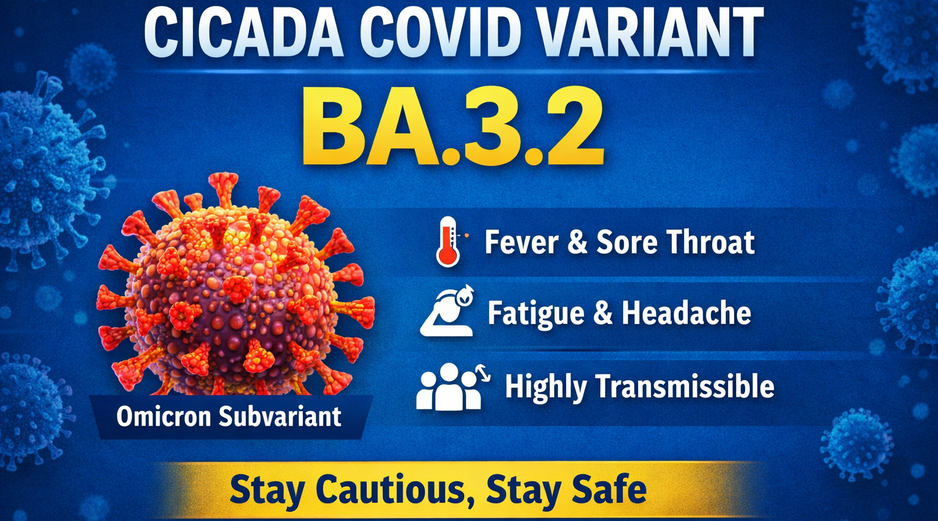
The COVID-19 virus continues to evolve, and new variants keep emerging across the globe. One such variant gaining attention is the BA.3.2 subvariant, often nicknamed the “Cicada variant.” While the name may sound unusual, understanding its characteristics is important to stay informed and prepared.
What is the Cicada COVID Variant (BA.3.2)?
BA.3.2 is a sublineage of the Omicron family of COVID-19 variants. Like other Omicron subvariants, it is the result of mutations in the virus that may affect how easily it spreads or how the body responds to it.
The nickname “Cicada variant” comes from its periodic emergence pattern, similar to cicadas that appear after long intervals. However, this is more of a media term than a scientific classification.
Key Symptoms of BA.3.2
Most symptoms reported with BA.3.2 are similar to previous Omicron variants. These include:
- Mild to moderate fever
- Sore throat
- Runny or blocked nose
- Dry cough
- Fatigue and body aches
- Headache
Some people may also experience:
- Loss of taste or smell (less common than earlier variants)
- Gastrointestinal issues like nausea
👉 Important: Symptoms can vary depending on immunity levels, vaccination status, and overall health.
How Fast Does It Spread?
BA.3.2 is believed to be highly transmissible, similar to other Omicron subvariants. This means:
- It spreads quickly in crowded or poorly ventilated areas
- Reinfections are possible
- Even vaccinated individuals may get infected, though usually with milder symptoms
Is It More Dangerous?
So far, there is no strong evidence that BA.3.2 causes more severe illness than previous Omicron variants. Most cases remain mild, especially in:
- Vaccinated individuals
- People with prior infections
However, high-risk groups should remain cautious:
- Elderly individuals
- People with chronic illnesses
- Immunocompromised patients
Vaccines and Protection
Current COVID-19 vaccines still offer strong protection against severe illness, hospitalization, and death.
What you should do:
- Stay updated with booster doses
- Wear masks in crowded places
- Maintain hand hygiene
- Avoid close contact if feeling unwell
Should You Be Worried?
There’s no need to panic, but staying informed is essential. The BA.3.2 variant highlights that COVID-19 is still evolving, and precautionary measures remain important.
👉 Think of it this way: awareness and basic precautions are your best defense.
FAQs About BA.3.2 (Cicada Variant)
1. Is BA.3.2 officially named the Cicada variant?
No, “Cicada variant” is an informal nickname used in media, not an official scientific term.
2. Are symptoms different from earlier COVID variants?
Not significantly. Most symptoms are similar to Omicron variants.
3. Can vaccinated people get infected?
Yes, but symptoms are usually mild and recovery is faster.
4. Do masks still help?
Yes, especially in crowded or indoor settings.
5. Is testing still necessary?
If you have symptoms or have been exposed, testing is recommended to prevent spread.
Final Thoughts
The emergence of the BA.3.2 (Cicada) variant is another reminder that COVID-19 hasn’t completely disappeared. While it may not be more dangerous, its high transmissibility means we should remain cautious.
Staying updated, following basic safety measures, and maintaining a healthy lifestyle are the best ways to protect yourself and your family.
Latest Post
- Condom Shortage in the Indian Market: Causes, Impact, and How to Manage It
- Best Summer Skincare Routine for All Skin Types (Simple Guide)
- Cicada COVID Variant BA.3.2: Symptoms, Spread & Latest Updates (2026)
- World Chagas Disease Day – 14 April 2026: Spreading Awareness About a Neglected Disease
- April 11: World Parkinson’s Day April 11:(2026) – Raising Awareness, Inspiring Hope