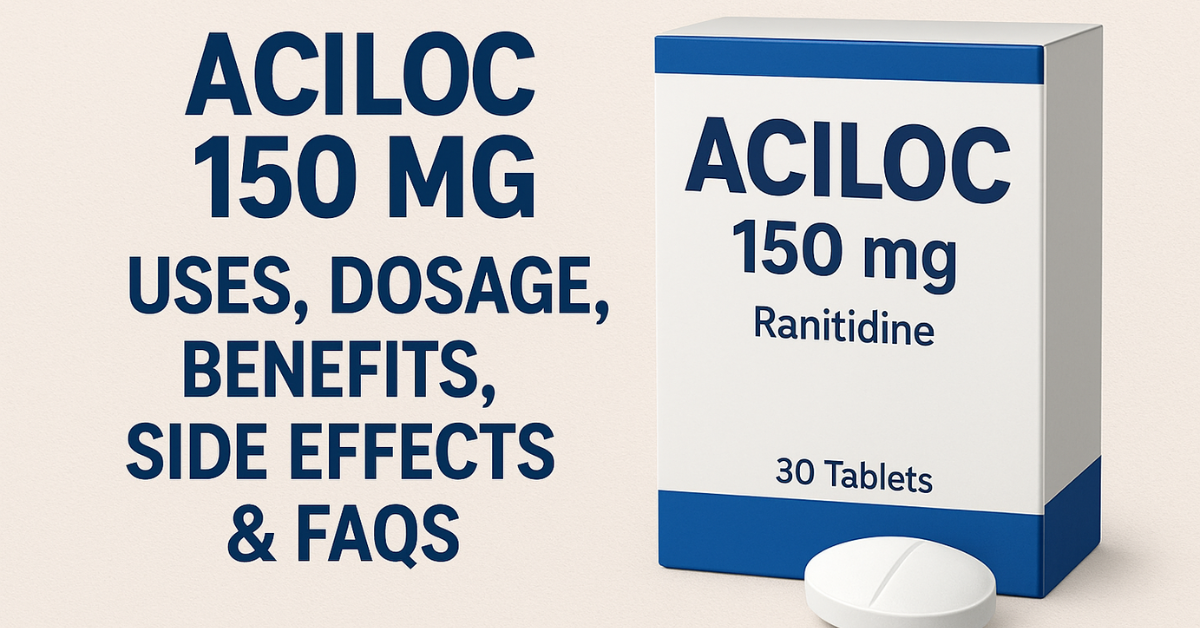
Aciloc is a commonly prescribed antacid and anti-ulcer medication used to reduce excess stomach acid. It belongs to a class of drugs called H2 receptor blockers, with its active ingredient Ranitidine. Doctors prescribe Aciloc to treat acidity-related disorders, heartburn, and stomach ulcers.
This blog covers everything you need to know about Aciloc 150 mg, including how it works, dosage guide, benefits, side effects, and frequently asked questions.
⭐ What is Aciloc 150 mg?
Aciloc 150 mg contains Ranitidine (150 mg), a medicine that reduces stomach acid production. By lowering acid levels, it provides relief from heartburn, gastritis, acid reflux (GERD) and helps ulcers heal faster.
⭐ Uses of Aciloc 150 mg
Aciloc 150 mg is commonly used for:
✔️ Acidity / Heartburn
Helps reduce burning sensation and indigestion caused by excess acid.
✔️ Gastroesophageal Reflux Disease (GERD)
Prevents acid from flowing back into the food pipe, reducing irritation.
✔️ Peptic Ulcers (Stomach or Duodenal Ulcers)
Promotes faster healing by lowering acid production.
✔️ Gastritis
Relieves inflammation of the stomach lining.
✔️ Zollinger-Ellison Syndrome
Used to manage chronic excessive acid production.
✔️ Acid prevention before surgery
Sometimes recommended to reduce aspiration risk.
⭐ How Does Aciloc 150 mg Work?
Aciloc blocks H2 receptors in the stomach, decreasing acid secretion.
Less acid → reduced irritation → faster healing.
⭐ Aciloc 150 mg Dose
Typical adult dosage:
- 150 mg once or twice daily, OR
- 150 mg at bedtime (for ulcers)
For GERD:
150 mg twice daily or as advised.
For heartburn relief:
150 mg once daily or when needed.
⚠️ Always follow your doctor’s prescription.
Dosage may vary based on condition, age, and severity.
⭐ Benefits of Aciloc 150 mg
✔ Provides quick relief from acidity
✔ Reduces heartburn & stomach discomfort
✔ Helps in ulcer healing
✔ Controls acid reflux
✔ Prevents nighttime acidity
✔ Improves overall digestive comfort
⭐ Side Effects of Aciloc 150 mg
While mostly safe, some people may experience:
Common side effects
- Headache
- Dizziness
- Constipation or diarrhea
- Stomach pain
- Fatigue
Rare but serious
- Liver dysfunction
- Irregular heartbeat
- Allergic reactions
- Low blood pressure
If you notice severe side effects, seek medical help immediately.
⭐ Precautions
Do not take Aciloc 150 mg without medical advice if you:
❌ Have kidney or liver disease
❌ Are pregnant or breastfeeding
❌ Have a history of stomach cancer
❌ Are using other acid-reducing medications
Avoid alcohol and spicy food for better results.
⭐ Drug Interactions
Aciloc may interact with:
- Blood thinners
- Antifungal medicines
- Anti-HIV drugs
- Blood pressure medicines
Always inform your doctor about all medications you take.
FAQs About Aciloc 150 mg
1. Can I take Aciloc 150 mg daily?
Yes, but only if prescribed. Long-term self-medication is not advised.
2. How long does Aciloc take to work?
It usually starts working within 30–45 minutes.
3. Is Aciloc safe during pregnancy?
Use only if your doctor recommends it.
4. Can I take Aciloc 150 after food?
Yes, it can be taken before or after meals, but before meals works best for acidity.
5. Is Aciloc the same as Ranitidine?
Yes, Aciloc contains Ranitidine as the active ingredient.
6. Can I take Aciloc 150 mg with antacids?
Yes, but maintain a 1-hour gap.
7. Is Aciloc banned in India?
Ranitidine products were temporarily restricted earlier but have returned to the market under quality-assured batches. Always buy from reputable pharmacies.
Conclusion
Aciloc 150 mg is a reliable and effective medicine for acidity, heartburn, GERD, and ulcers. While it offers quick relief, it should be used responsibly and under medical supervision, especially in long-term treatments.
Latest Post
- Maxgalin Capsule — Uses, Dosage, Side Effects, Price, FAQs & Brand Comparison
- Gabapin NT Tablet — Uses, Dosage, Side Effects, Price, FAQs & Brand Comparison
- Voveran Tablet — Uses, Dosage, Side Effects, Price, FAQs & Brand Comparison
- Myospaz Tablet — Uses, Dosage,Side Effects, Price, FAQs & Brand Comparison
- Flexon Tablet — Uses, Dosage, Side Effects, Price, FAQs & Brand Comparison