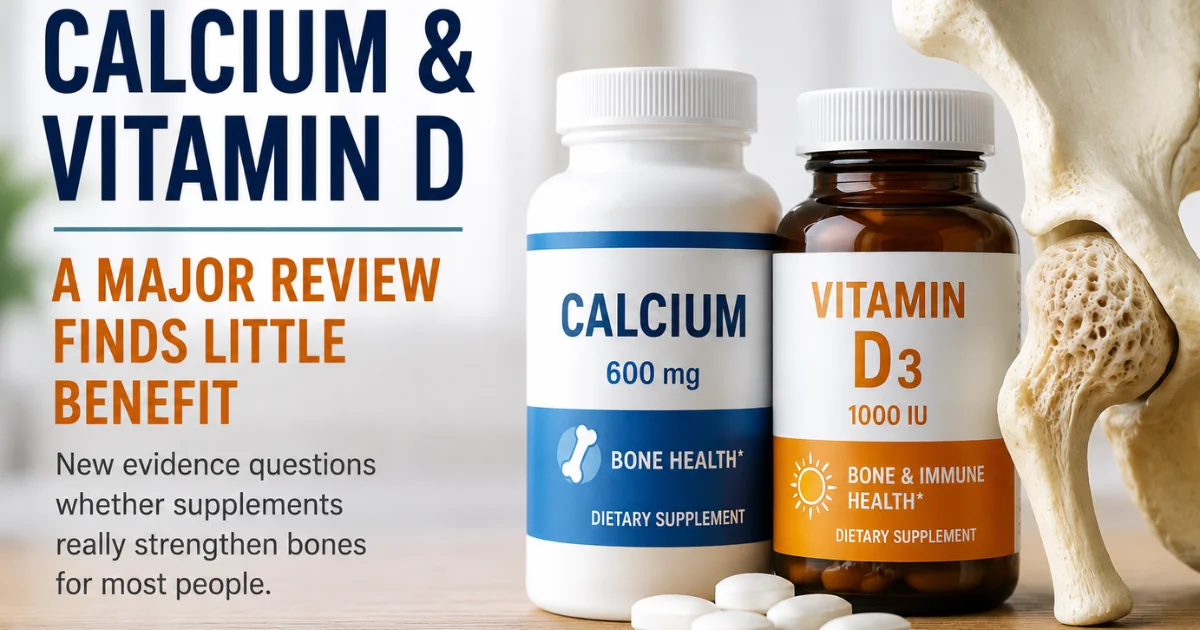
For decades, calcium and vitamin D supplements have been widely recommended to support bone health and prevent fractures. Millions of people around the world, particularly older adults, take these supplements daily believing they are essential for maintaining strong bones and reducing the risk of osteoporosis.
However, recent scientific evidence has challenged this long-held belief. A major review of multiple studies has found that calcium and vitamin D supplements may provide little to no significant benefit in preventing fractures among healthy adults living in the community. These findings have sparked discussions among healthcare professionals and raised important questions about the role of supplements in bone health.
Why Calcium and Vitamin D Are Important
Calcium is a vital mineral that helps build and maintain strong bones and teeth. About 99% of the body’s calcium is stored in bones, making it crucial for skeletal health. In addition to bone strength, calcium plays an important role in muscle contraction, nerve signaling, and blood clotting.
Vitamin D, often called the “sunshine vitamin,” helps the body absorb calcium efficiently. Without adequate vitamin D, the body cannot absorb enough calcium from food, which may eventually lead to weakened bones.
Because of this relationship, calcium and vitamin D have long been considered a powerful combination for preventing osteoporosis and fractures.
The Popularity of Supplements
As people age, bone density naturally declines. Women after menopause and older adults are particularly vulnerable to osteoporosis, a condition characterized by weak and brittle bones.
To counter this risk, many healthcare providers have historically recommended calcium and vitamin D supplements. The supplement industry has also heavily promoted these products as an easy way to maintain bone health.
Today, millions of adults take calcium tablets, vitamin D capsules, or combination supplements every day.
What the Major Review Found
A comprehensive review published in a leading medical journal analyzed numerous randomized controlled trials involving thousands of participants.
Researchers examined whether calcium supplements, vitamin D supplements, or a combination of both could reduce the risk of fractures among community-dwelling adults who did not have severe vitamin D deficiency or diagnosed osteoporosis.
The results were surprising:
- Calcium supplements alone did not significantly reduce fracture risk.
- Vitamin D supplements alone showed little benefit.
- Combined calcium and vitamin D supplementation also failed to demonstrate a meaningful reduction in fractures for most healthy adults.
- Bone mineral density improvements were generally small and often not clinically significant.
These findings suggest that routine supplementation may not provide the protective effects many people expect.
Why Supplements May Not Work as Expected
Several factors may explain why calcium and vitamin D supplements show limited benefits in healthy adults.
1. Adequate Nutrient Intake from Diet
Many individuals already receive sufficient calcium and vitamin D through their diet and lifestyle. In such cases, additional supplementation may offer little advantage.
Common dietary sources of calcium include:
- Milk
- Yogurt
- Cheese
- Tofu
- Almonds
- Leafy green vegetables
Vitamin D can be obtained through:
- Sunlight exposure
- Fatty fish such as salmon and tuna
- Egg yolks
- Fortified foods
When nutritional needs are already met, supplements may not significantly improve bone health.
2. Bone Health Depends on More Than Nutrients
Strong bones require more than calcium and vitamin D. Other factors play critical roles, including:
- Regular physical activity
- Resistance training
- Adequate protein intake
- Hormonal balance
- Avoiding smoking
- Limiting excessive alcohol consumption
A supplement cannot compensate for poor lifestyle habits that negatively affect bone strength.
3. Fractures Have Multiple Causes
Falls are one of the leading causes of fractures in older adults. Even if bone density improves slightly, fractures can still occur due to balance issues, muscle weakness, vision problems, or environmental hazards.
Therefore, preventing fractures requires a broader approach than simply increasing calcium intake.
Are Supplements Ever Necessary?
The findings do not mean calcium and vitamin D supplements are useless for everyone.
Certain groups may still benefit from supplementation, including:
People with Vitamin D Deficiency
Individuals with confirmed low vitamin D levels may require supplements to restore normal levels and support bone health.
Older Adults in Care Facilities
Some studies suggest that elderly individuals living in nursing homes or long-term care facilities may benefit from supplementation due to limited sun exposure and dietary intake.
Patients with Osteoporosis
People diagnosed with osteoporosis may require calcium and vitamin D as part of a broader treatment plan that includes prescription medications.
Individuals with Dietary Restrictions
Those who avoid dairy products, have malabsorption disorders, or follow restrictive diets may struggle to obtain adequate calcium through food alone.
In these situations, healthcare providers may recommend targeted supplementation.
Potential Risks of Excessive Supplement Use
Many people assume supplements are completely harmless, but excessive intake can carry risks.
Potential concerns include:
- Kidney stones
- Constipation
- Digestive discomfort
- Elevated blood calcium levels
- Possible cardiovascular concerns in some studies
Taking more than the recommended amount does not necessarily provide additional benefits and may increase the likelihood of side effects.
Focus on a Bone-Healthy Lifestyle
Instead of relying solely on supplements, experts increasingly recommend a comprehensive approach to bone health.
Eat a Balanced Diet
Consume calcium-rich foods and ensure adequate intake of protein, magnesium, and other nutrients that support bone strength.
Stay Physically Active
Weight-bearing exercises such as walking, jogging, dancing, and strength training help stimulate bone formation and maintain bone density.
Get Safe Sun Exposure
Moderate sunlight exposure can help the body produce vitamin D naturally.
Prevent Falls
Improving balance, maintaining muscle strength, and creating a safe home environment can significantly reduce fracture risk.
Avoid Smoking
Smoking is associated with lower bone density and increased fracture risk.
Final Thoughts
The belief that calcium and vitamin D supplements automatically lead to stronger bones has been deeply rooted in public health advice for many years. However, recent evidence suggests that routine supplementation may provide little benefit in preventing fractures among healthy adults who already receive adequate nutrition.
This does not mean calcium and vitamin D are unimportant. Both nutrients remain essential for maintaining healthy bones and overall well-being. The key message is that supplements should not be viewed as a universal solution.
For most people, a balanced diet, regular exercise, sufficient sunlight exposure, and healthy lifestyle habits are likely to have a greater impact on bone health than routine supplementation alone. Before starting or stopping any supplement, it is always advisable to consult a healthcare professional who can assess individual nutritional needs and health risks.
Latest Post
- World Contraception Day 2026 Importance, Methods, Benefits and the Need for Better Awareness
- World Physiotherapy Day Importance, Benefits, and the Role of Physiotherapy in Better Health
- World Sexual Health Day Promoting Awareness, Safety, Respect, and Healthy Relationships
- Gujarat Health Machinery Placed On High Alert Following Chandipura Virus Outbreak
- International Overdose Awareness Day 2026 Meaning, Importance, Overdose Prevention & Awareness