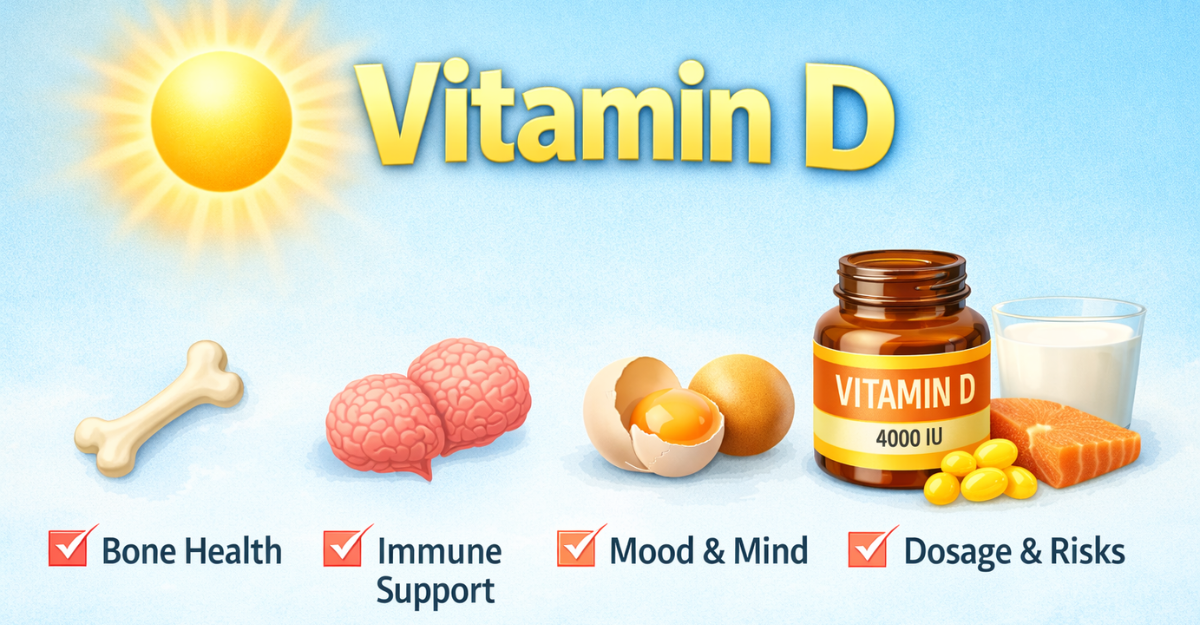
Vitamin D is often called the “sunshine vitamin” because your body produces it when exposed to sunlight. Despite its natural availability, Vitamin D deficiency is surprisingly common, especially in people who spend most of their time indoors or live in areas with limited sunlight.
In this article, we’ll explore the uses, recommended dosage, benefits, and possible side effects of Vitamin D in a simple and easy-to-understand way.
What is Vitamin D?
Vitamin D is a fat-soluble vitamin that plays a crucial role in maintaining overall health. It helps your body absorb calcium and phosphorus—two minerals essential for strong bones and teeth.
There are two main forms:
- Vitamin D2 (Ergocalciferol) – from plant sources
- Vitamin D3 (Cholecalciferol) – produced in the skin and found in animal-based foods
Vitamin D3 is generally considered more effective in raising Vitamin D levels in the body.
Uses of Vitamin D
Vitamin D is used for several important functions in the body:
1. Bone Health
It helps in calcium absorption, preventing conditions like:
- Osteoporosis
- Rickets (in children)
- Osteomalacia (in adults)
2. Immune System Support
Vitamin D strengthens your immune system, helping your body fight infections and illnesses.
3. Muscle Function
It supports muscle strength and reduces the risk of falls, especially in older adults.
4. Mood Regulation
Low Vitamin D levels have been linked to depression and mood disorders.
5. Heart Health
It may play a role in regulating blood pressure and improving cardiovascular health.
Benefits of Vitamin D
Here are the key benefits of maintaining adequate Vitamin D levels:
✔ Stronger Bones and Teeth
Vitamin D ensures proper calcium absorption, reducing the risk of fractures.
✔ Improved Immunity
It helps your body fight viruses, bacteria, and infections.
✔ Better Mental Health
Some studies suggest Vitamin D may help reduce symptoms of depression.
✔ Reduced Risk of Chronic Diseases
Adequate Vitamin D levels may lower the risk of:
- Diabetes
- Heart disease
- Certain cancers
✔ Supports Weight Management
Vitamin D may help regulate metabolism and support weight loss efforts.
Recommended Dosage of Vitamin D
The dosage of Vitamin D depends on age, health condition, and deficiency levels.
General Daily Recommendations:
- Infants (0–12 months): 400 IU
- Children (1–18 years): 600 IU
- Adults (19–70 years): 600–800 IU
- Older adults (70+ years): 800 IU
For Deficiency:
Doctors may prescribe higher doses such as:
- 60,000 IU weekly for a few weeks (common in India)
⚠️ Important: Always consult a doctor before taking high-dose supplements.
Sources of Vitamin D
You can get Vitamin D from:
🌞 Sunlight
- 10–30 minutes of sunlight exposure (morning or evening)
🍳 Foods
- Egg yolks
- Fatty fish (salmon, tuna)
- Fortified milk and cereals
💊 Supplements
- Vitamin D tablets, capsules, or sachets
Side Effects of Vitamin D
Vitamin D is generally safe when taken in recommended doses. However, excessive intake can lead to side effects.
Common Side Effects (High Dose):
- Nausea and vomiting
- Constipation
- Loss of appetite
- Weakness
Serious Side Effects:
- High calcium levels (Hypercalcemia)
- Kidney stones
- Kidney damage
- Confusion or irregular heartbeat
Signs of Vitamin D Toxicity:
- Excessive thirst
- Frequent urination
- Bone pain
- Fatigue
⚠️ Toxicity usually occurs due to overuse of supplements, not sunlight or food.
Who is at Risk of Vitamin D Deficiency?
You may be at higher risk if you:
- Stay indoors most of the time
- Have darker skin
- Are overweight or obese
- Are elderly
- Have digestive disorders
Tips to Maintain Healthy Vitamin D Levels
- Get regular sunlight exposure
- Include Vitamin D-rich foods in your diet
- Take supplements only when prescribed
- Check your Vitamin D levels through blood tests if needed
Conclusion
Vitamin D is essential for strong bones, a healthy immune system, and overall well-being. While sunlight is the best natural source, many people still require supplements to meet their daily needs.
However, balance is key. Both deficiency and excess can cause health issues. Always follow the recommended dosage and consult a healthcare professional before starting supplements.
FAQs
1. Can I take Vitamin D daily?
Yes, but only within recommended doses unless prescribed by a doctor.
2. What is the best time to take Vitamin D?
It is best taken with meals, especially those containing fats, for better absorption.
3. How long does it take to correct deficiency?
It may take a few weeks to months depending on the severity.
Latest Post
- July 23 World Sjögren’s Day 2026 Understanding the “Invisible” Autoimmune Disease
- World Brain Day 2026 History, Importance, Theme, and Tips for a Healthy Brain
- M Solvin Cough Syrup Uses, Benefits, Dosage, Side Effects, Price & Complete Guide
- Chronic Disease Awareness Day Why Awareness, Prevention, and Early Detection Matter
- National Doctors’ Day 2026 History, Significance, Theme, Celebration & Inspiring Facts