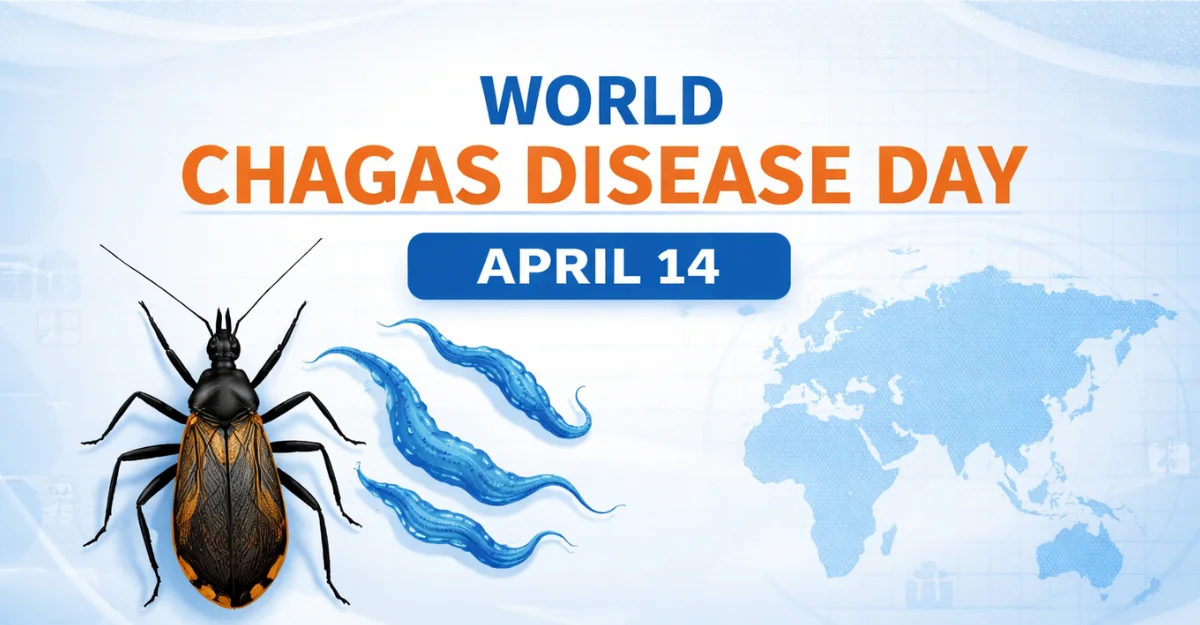
Every year on April 14, the world observes World Chagas Disease Day to raise awareness about one of the most overlooked yet potentially life-threatening diseases—Chagas disease. Despite affecting millions of people globally, this disease continues to remain largely neglected, especially in low-income and rural communities.
In 2026, the importance of this day grows even stronger as global health organizations push for early diagnosis, better treatment access, and improved public awareness.
🦠 Understanding Chagas Disease
Chagas disease is caused by a parasite known as Trypanosoma cruzi. It is mainly transmitted to humans through the bite of infected triatomine bugs, commonly referred to as “kissing bugs.” These insects typically bite exposed areas of the skin, often around the face, and transmit the parasite through their feces.
Although the disease is most prevalent in Latin America, globalization and migration have led to cases being reported across North America, Europe, and parts of Asia.
⚠️ Signs and Symptoms
One of the reasons Chagas disease is so dangerous is that it often goes unnoticed in its early stages. The disease progresses in two phases:
Acute Phase
This occurs shortly after infection and may last for a few weeks or months. Symptoms are usually mild and may include:
- Fever and fatigue
- Body aches and headache
- Swelling at the infection site
- Rash or loss of appetite
Many people do not realize they are infected during this stage.
Chronic Phase
If left untreated, the infection enters a long-term phase that can last for years or even decades. During this stage, serious complications may develop, such as:
- Heart rhythm abnormalities
- Enlarged heart (cardiomyopathy)
- Digestive problems like enlarged esophagus or colon
Approximately 20–30% of infected individuals develop severe complications, which can be fatal.
🌍 Why World Chagas Disease Day Matters
The World Health Organization officially recognized this day to bring global attention to a disease that has long been ignored.
Key Objectives:
- Increase awareness among the general public
- Promote early screening and diagnosis
- Improve access to treatment and healthcare services
- Reduce stigma associated with the disease
World Chagas Disease Day 2026 highlights the urgent need for equitable healthcare access and stronger global cooperation to eliminate this disease.
🧬 How Chagas Disease Spreads
While insect bites are the primary mode of transmission, the disease can also spread through:
- Mother-to-child transmission during pregnancy
- Blood transfusion from an infected donor
- Organ transplantation
- Consumption of contaminated food or drink
This wide range of transmission routes makes awareness and preventive measures even more important.
💊 Treatment and Prevention
Treatment Options
Chagas disease can be treated, especially if detected early. Two commonly used medications include:
- Benznidazole
- Nifurtimox
These medications are most effective during the acute phase but can also help slow disease progression in the chronic phase.
Prevention Strategies
Preventing Chagas disease involves both individual and community-level actions:
- Improving housing conditions to reduce insect habitats
- Using insecticides in high-risk areas
- Screening blood donors and organ transplants
- Conducting regular health check-ups, especially in endemic regions
🌐 Global Challenges
Despite being preventable and treatable, Chagas disease continues to face several major challenges:
- Lack of awareness among healthcare providers and communities
- Limited access to diagnostic facilities
- High treatment costs in some regions
- Social stigma that prevents people from seeking help
Addressing these challenges requires coordinated efforts from governments, healthcare systems, and international organizations.
💡 How You Can Contribute
Even small actions can make a big difference:
- Share information about Chagas disease on social media
- Support organizations working in disease prevention
- Encourage early testing and diagnosis
- Educate others about neglected tropical diseases
📝 Conclusion
World Chagas Disease Day on 14 April 2026 is a powerful reminder that millions of people continue to suffer from a disease that is both preventable and treatable. By raising awareness, promoting early diagnosis, and supporting global health initiatives, we can work together to eliminate Chagas disease and improve the lives of those affected.
Awareness is the first step toward change—and your voice can help make that change happen.
❓ FAQs
1. What causes Chagas disease?
It is caused by the parasite Trypanosoma cruzi, usually transmitted by insect bites.
2. Is Chagas disease curable?
Yes, it is curable if detected early and treated promptly.
3. Is it common in India?
Chagas disease is rare in India but can occur due to international travel or migration.
4. Why is it called a neglected disease?
Because it receives less attention, funding, and awareness compared to other major diseases.
Latest Post
- World Contraception Day 2026 Importance, Methods, Benefits and the Need for Better Awareness
- World Physiotherapy Day Importance, Benefits, and the Role of Physiotherapy in Better Health
- World Sexual Health Day Promoting Awareness, Safety, Respect, and Healthy Relationships
- Gujarat Health Machinery Placed On High Alert Following Chandipura Virus Outbreak
- International Overdose Awareness Day 2026 Meaning, Importance, Overdose Prevention & Awareness