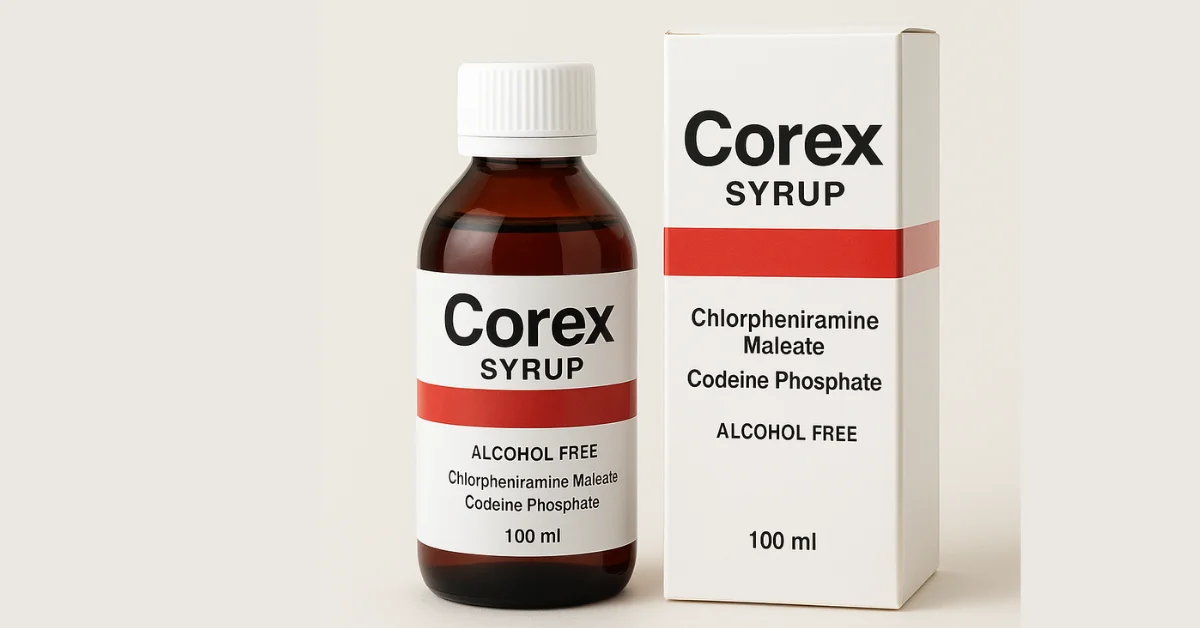
Cough and cold are common problems that affect people of all ages. When symptoms like dry cough, throat irritation, sneezing, or nasal congestion become uncomfortable, many people look for fast relief. Corex syrup is one such commonly used cough medicine that helps soothe cough and related symptoms.
In this blog, we explain what Corex syrup is, its uses, dosage, side effects, precautions, and frequently asked questions.
What is Corex Syrup?
Corex is a cough syrup used to relieve symptoms of:
- Dry cough
- Throat irritation
- Runny nose
- Sneezing
- Allergic cough
- Mild cold symptoms
Different variants exist today (like Corex DX), usually containing a cough suppressant and an anti-allergic ingredient, which help reduce cough reflex and ease breathing discomfort.
Corex Syrup Uses
Corex syrup is used for:
✔ Dry Cough Relief
Helps reduce persistent, irritating dry cough.
✔ Allergy-Related Symptoms
Reduces sneezing, watery eyes, and runny nose.
✔ Throat Irritation
Soothes the throat and gives relief from irritation caused by frequent coughing.
✔ Cold & Flu Symptoms
Useful in mild cold symptoms like nasal congestion or mild chest discomfort.
✔ Improves Sleep During Cough
Because it reduces cough frequency, it helps patients rest better at night.
Corex Syrup Dosage
⚠ Dosage may vary depending on formulation. Always follow your doctor’s instructions.
Adults
- 5 ml, 2–3 times daily
Take at evenly spaced intervals.
Children (6–12 years)
- 2.5 ml, 2–3 times daily
❌ Not recommended for:
- Children below 2 years
- Pregnant or breastfeeding women without medical advice
- People with severe respiratory problems
Tip: Use the measuring cup/spoon provided with the bottle. Do not take more than the recommended dose.
Possible Side Effects of Corex Syrup
While Corex is generally safe when used correctly, some people may experience:
- Drowsiness / Sleepiness
- Dizziness or reduced alertness
- Dry mouth
- Nausea or vomiting
- Constipation
- Blurred vision
- Stomach discomfort
Serious but rare side effects:
- Breathing difficulty
- Fast heartbeat
- Allergic reactions (rash, swelling)
Seek medical help if any severe symptom appears.
Precautions Before Using Corex Syrup
- Do not drive or operate machines after taking it (may cause drowsiness).
- Avoid alcohol — increases drowsiness and side effects.
- Not safe for people with asthma, glaucoma, urinary problems, or liver/kidney issues without doctor guidance.
- Not recommended for long-term use.
- Avoid combining with other cough or allergy medicines.
FAQs About Corex Syrup
1. Is Corex syrup safe?
Yes, when taken in recommended doses. Overuse or misuse can cause harmful effects.
2. Can I use Corex for wet cough?
No. It is mainly meant for dry cough. For wet cough, expectorant syrups are usually better.
3. Does Corex make you sleepy?
Yes. Drowsiness is a common side effect due to its antihistamine content.
4. Can pregnant women take Corex?
Not recommended unless a doctor prescribes it.
5. Can I take Corex with paracetamol?
Generally yes, but avoid mixing with other cold or cough medicines without medical advice.
6. Is Corex addictive?
Regular modern formulations are non-addictive, but older codeine-based versions were controlled. Always use as directed.
7. How long can I take Corex?
Use only for short periods—usually 2–5 days. If cough persists, consult a doctor.
8.what corex banned in india
Good question. Yes — Corex cough syrup was banned in India (in its original formulation containing codeine + chlorpheniramine). Here’s what you should know.
Why and when Corex got banned
- In March 2016, the Ministry of Health and Family Welfare (Government of India) issued a notification banning about 344 fixed-dose combination (FDC) drugs, including the codeine + chlorpheniramine cough syrup formulation sold under the Corex brand. (The Times of India)
- As a result, the manufacturer Pfizer immediately discontinued the manufacture and sale of Corex under that formulation.
The authorities concluded that such fixed-dose combinations had “no therapeutic justification” and posed potential risks, prompting the ban.
🔄 Does this mean Corex is completely unavailable now?
- The ban removed the codeine-containing Corex syrup from sale and distribution.
- Because of this, the original Corex syrup became unavailable via regular legal supply channels.
- However — and this is important — newer versions or formulations of “Corex” without codeine may exist and may or may not be subject to the ban depending on ingredients. A recent report from Uttar Pradesh suggests that if a version of Corex does not contain codeine, it is “removed from the banned category” there.
⚠️ What it means for users
- You should assume that the classic, codeine-based Corex is not legally sold in India anymore.
- If you see a “Corex” syrup available now, you must check the active ingredients carefully. If it has codeine + chlorpheniramine (or other banned FDC combination), it is likely illicit.
- Even for non-codeine versions, you should be cautious — always verify ingredients and legality.
If you like — I can check 2025 status (is the ban still enforced everywhere; any court orders or amendments) and tell you whether Corex (or similar cough syrups) are legally sold in Uttar Pradesh (since you are from Lucknow).
Final Thoughts
Corex syrup is an effective and commonly used remedy for dry cough and allergy-related symptoms. When used properly, it provides quick relief and improves comfort. However, misuse can lead to side effects, especially drowsiness. Always follow the correct dose and avoid using it for long periods without medical advice.
Latest Post
- World Contraception Day 2026 Importance, Methods, Benefits and the Need for Better Awareness
- World Physiotherapy Day Importance, Benefits, and the Role of Physiotherapy in Better Health
- World Sexual Health Day Promoting Awareness, Safety, Respect, and Healthy Relationships
- Gujarat Health Machinery Placed On High Alert Following Chandipura Virus Outbreak
- International Overdose Awareness Day 2026 Meaning, Importance, Overdose Prevention & Awareness