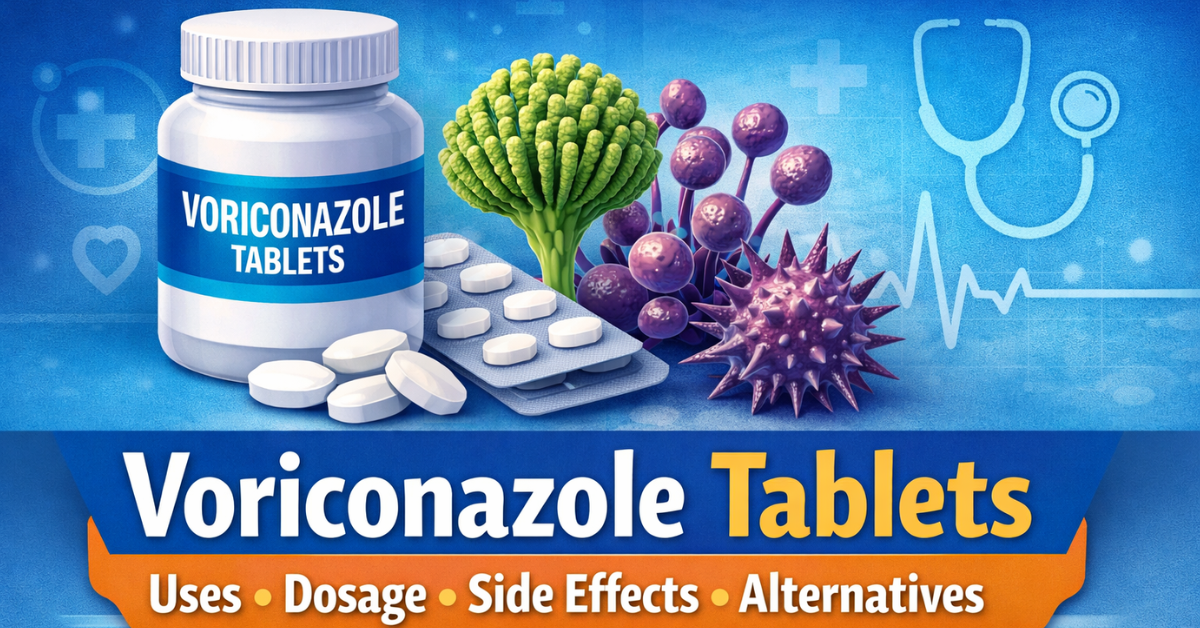
Voriconazole tablet is a prescription antifungal medicine widely used to treat serious fungal infections, especially in patients with weakened immunity. It belongs to the triazole antifungal class and works by stopping the growth of fungi.
In this article, we will explain voriconazole tablet uses, dosage, side effects, alternatives, and answer common questions in a simple way.
What is Voriconazole Tablet?
This is an antifungal drug used to treat life-threatening fungal infections caused by organisms like Aspergillus and Candida. It is commonly prescribed in hospitals and for patients with severe infections.
Uses
This tablet is mainly used for:
- Invasive aspergillosis
- Serious Candida infections (including bloodstream infections)
- Fungal infections resistant to other antifungals
- Severe fungal infections in immunocompromised patients
- Fungal lung infections
⚠️ Note: Any medicine should be taken only on a doctor’s prescription.
How Its Works
It works by blocking the fungal cell membrane formation, which prevents fungi from growing and multiplying. This helps the body fight and eliminate the infection effectively.
Dosage
The dosage depends on:
- Age
- Body weight
- Type and severity of infection
- Liver function
- Other medicines being taken
General Dosage (Adults)
- Loading dose: Higher dose for the first 24 hours
- Maintenance dose: Usually taken twice daily
💡 Important:
- Take the tablet 1 hour before or after food
- Do not skip or stop the medicine without consulting your doctor
Side Effects
Like all medicines, may cause side effects. Most are mild and temporary.
Common Side Effects
- Nausea or vomiting
- Headache
- Abdominal pain
- Diarrhea
- Dizziness
Serious Side Effects (Rare)
- Blurred or altered vision
- Liver problems
- Skin rash or sensitivity to sunlight
- Irregular heartbeat
🚨 Seek medical help immediately if you experience severe vision changes, yellowing of eyes/skin, or allergic reactions.
Precautions While Taking Voriconazole
- Avoid direct sunlight; use sunscreen
- Inform your doctor if you have liver disease
- Avoid alcohol
- Tell your doctor about all medicines you are taking
- Not recommended during pregnancy unless clearly needed
Voriconazole Tablet Alternatives
Some common alternatives include:
- Fluconazole
- Itraconazole
- Posaconazole
- Amphotericin B
- Caspofungin
👉 The choice of alternative depends on the type of fungal infection and patient condition.
Voriconazole Tablet FAQs
1. Is voriconazole an antibiotic?
No. Voriconazole is an antifungal medicine, not an antibiotic.
2. Can voriconazole be taken daily?
Yes, but only as prescribed by a doctor, usually twice daily.
3. Does voriconazole affect vision?
Yes, some patients may experience temporary blurred or altered vision, especially at night.
4. Can I stop voriconazole once I feel better
No. Stopping early may cause the infection to return. Always complete the full course.
5. Is voriconazole safe for long-term use ?
Long-term use is possible under strict medical supervision, with regular liver tests.
Key Takeaways
- Voriconazole tablet is used for serious fungal infections
- Must be taken exactly as prescribed
- Monitor for vision and liver-related side effects
- Several antifungal alternatives are available
- Not for self-medication
Conclusion
Voriconazole tablet is a prescription antifungal medicine used to treat serious fungal infections such as aspergillosis and invasive candidiasis. It works effectively when taken in the correct dose and duration as advised by a doctor. Because it may cause side effects like vision changes and liver problems, regular monitoring is important during treatment. Always complete the full course and avoid self-medication for safe and effective results.
Final Words
Voriconazole tablet is a powerful antifungal medicine that plays a crucial role in the treatment of serious fungal infections. When used responsibly under medical supervision, it offers effective control and improves patient outcomes. To avoid complications, always follow your doctor’s advice, complete the prescribed course, and never self-medicate.
If you found this article helpful, explore more medicine information blogs on Diagnodrug.com for trusted and easy-to-read health content.
Latest Post
- Earth Day 2026: Importance, History & Simple Ways to Save Our Planet
- World Irritable Bowel Syndrome (IBS) Day 2026: Understanding Symptoms, Causes, and Management
- World Liver Day 2026: Causes, Symptoms, and Tips for Healthy Liver
- World Hemophilia Day 2026: Raising Awareness, Inspiring Change
- Condom Shortage in the Indian Market: Causes, Impact, and How to Manage It