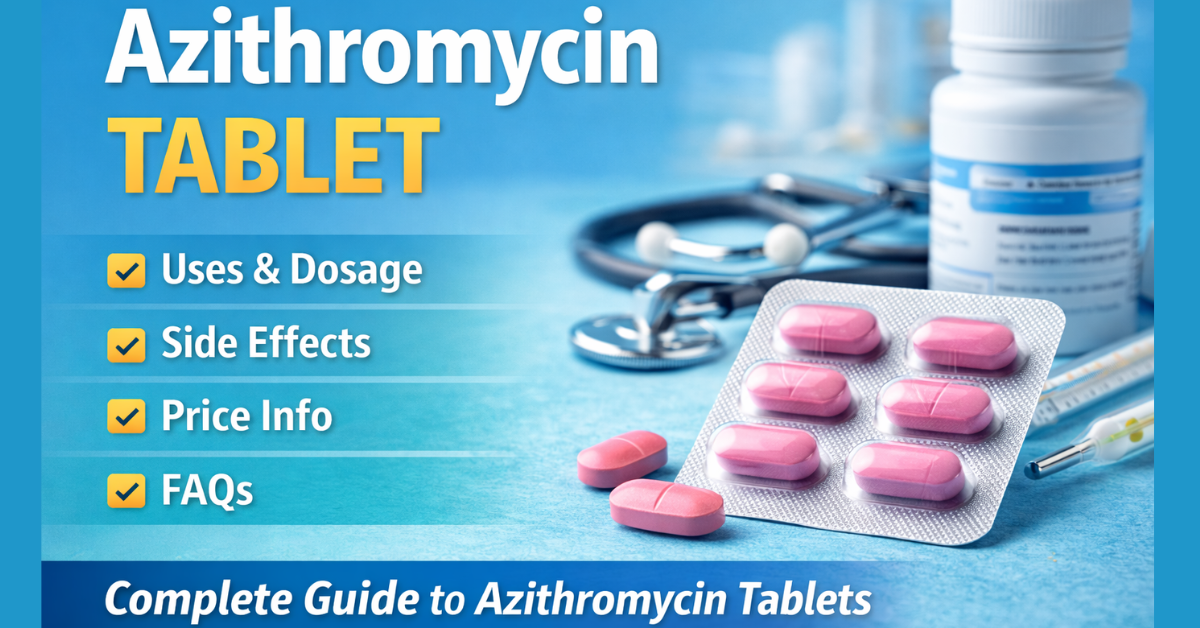
Azithromycin tablet is a commonly prescribed antibiotic medicine used to treat a wide range of bacterial infections. It belongs to the macrolide class of antibiotics and works by stopping the growth of bacteria. Doctors frequently prescribe azithromycin for respiratory infections, throat infections, skin infections, ear infections, and certain sexually transmitted diseases.
Azithromycin is popular because of its short treatment duration, good effectiveness, and relatively fewer side effects when taken correctly.
What is Azithromycin Tablet?
Azithromycin tablet is an antibacterial medicine that fights infections caused by bacteria. It does not work against viral infections like the common cold or flu. The medicine is available in different strengths such as 250 mg, 500 mg, and 1000 mg, depending on the severity of infection.
Azithromycin Tablet Uses
Azithromycin tablet is used to treat various bacterial infections, including:
1. Respiratory Tract Infections
- Bronchitis
- Pneumonia
- Sinusitis
2. Throat and ENT Infections
- Tonsillitis
- Pharyngitis
- Ear infections (otitis media)
3. Skin and Soft Tissue Infections
- Skin abscess
- Infected wounds
4. Sexually Transmitted Infections (STIs)
- Chlamydia
- Certain cases of gonorrhea (with other medicines)
5. Typhoid (in some cases)
Used when other antibiotics are not suitable.
How Azithromycin Tablet Works
Azithromycin works by inhibiting bacterial protein synthesis, which prevents bacteria from growing and multiplying. This helps the immune system eliminate the infection more effectively.
Azithromycin Tablet Dosage
⚠️ Dosage depends on the type and severity of infection. Always follow your doctor’s prescription.
Common Dosage Guidelines
- Azithromycin 500 mg:
Usually taken once daily for 3 days - Azithromycin 250 mg:
Sometimes prescribed for 5 days - Single-dose therapy:
For some STIs, a single higher dose may be prescribed
How to Take Azithromycin Tablet
- Take with or without food
- Swallow whole with water
- Take at the same time each day
- Complete the full course, even if symptoms improve
Azithromycin Tablet Side Effects
Azithromycin is generally well tolerated, but some people may experience side effects.
Common Side Effects
- Nausea
- Vomiting
- Diarrhea
- Stomach pain
- Headache
Less Common Side Effects
- Dizziness
- Loss of appetite
- Skin rash
Rare but Serious Side Effects
- Severe allergic reactions
- Irregular heartbeat
- Liver problems
👉 Seek medical help immediately if you experience severe symptoms.
Precautions While Taking Azithromycin Tablet
- Inform your doctor if you have liver or heart problems
- Avoid alcohol during treatment
- Do not take for viral infections
- Pregnant and breastfeeding women should consult a doctor
- Avoid skipping doses to prevent antibiotic resistance
Azithromycin Tablet Price in India
The price may vary by brand and location.
💰 Approximate Price:
- Azithromycin 250 mg: ₹60 – ₹90 (strip of 6 tablets)
- Azithromycin 500 mg: ₹100 – ₹150 (strip of 3 tablets)
Prices may vary depending on manufacturer and pharmacy.
Azithromycin Tablet Alternatives
Some commonly prescribed alternatives include:
- Clarithromycin
- Amoxicillin
- Doxycycline
- Cefixime
- Levofloxacin
⚠️ Do not switch antibiotics without consulting a doctor.
Frequently Asked Questions (FAQs)
1. What is azithromycin tablet used for?
It is used to treat bacterial infections of the throat, lungs, skin, ear, and STIs.
2. Can azithromycin cure viral infections?
No, it works only against bacterial infections.
3. Can I take azithromycin without a prescription?
No, azithromycin is a prescription medicine and should be taken only under medical advice.
4. Is azithromycin safe during pregnancy?
It should be taken only if prescribed by a doctor.
5. Can azithromycin cause diarrhea?
Yes, mild diarrhea is a common side effect.
6. Should I stop azithromycin if I feel better?
No, always complete the full course as prescribed.
Conclusion
Azithromycin tablet is an effective and widely used antibiotic for treating bacterial infections. When taken in the correct dose and duration, it provides fast relief with minimal side effects. However, misuse or incomplete treatment can lead to antibiotic resistance, making future infections harder to treat.
Always take azithromycin tablet under medical supervision and never self-medicate.
Latest Post
- Earth Day 2026: Importance, History & Simple Ways to Save Our Planet
- World Irritable Bowel Syndrome (IBS) Day 2026: Understanding Symptoms, Causes, and Management
- World Liver Day 2026: Causes, Symptoms, and Tips for Healthy Liver
- World Hemophilia Day 2026: Raising Awareness, Inspiring Change
- Condom Shortage in the Indian Market: Causes, Impact, and How to Manage It