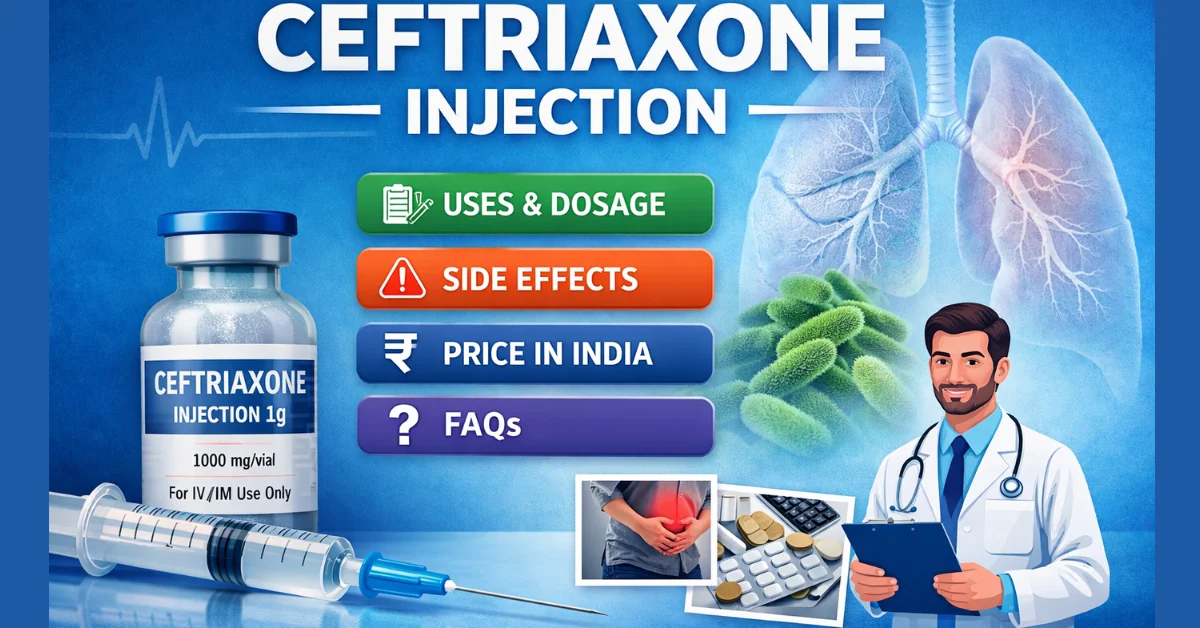
🩺 What Is Ceftriaxone?
Ceftriaxone is a third-generation cephalosporin antibiotic used to treat various bacterial infections. It works by inhibiting the formation of the bacterial cell wall, which kills the bacteria causing the infection.
Ceftriaxone is a cephalosporin (SEF a low spor in) antibiotic that is used to treat many kinds of bacterial infections, including severe or life-threatening forms such as E. coli, pneumonia, or meningitis. Ceftriaxone is also used to prevent infection in people having certain types of surgery.
🔹 Important: Ceftriaxone is not an oral tablet — it is given as an injection (IV/IM) by a doctor or trained healthcare provider.
How Ceftriaxone Works
- Blocking bacterial cell wall synthesis
- Making bacteria weak and unable to survive
- Helping the immune system clear the infection faster
Its long half-life allows once-daily dosing in many cases, which improves patient compliance
💊 Uses
is prescribed for a wide range of bacterial infections, such as:
- Pneumonia (lung infection)
- Urinary tract infections (UTIs)
- Meningitis (infection of brain/spinal cord lining)
- Bloodstream infections (septicemia)
- Bone and joint infections
- Skin and soft-tissue infections
- Gonorrhea (sexually transmitted infection)
- For prophylaxis (infection prevention) before some surgeries
It does not work for viral infections such as cold or flu.
💉 Doses
Since ceftriaxone is not a tablet, dosing depends on the type of infection and patient:
👨⚕️ Adults
- Typical dose: 1 – 2 g once daily
- Severe infections: Up to 4 g per day (divided once or twice)
- Special infections (e.g., meningitis): 2 g once daily for 7–14 days
👶 Children
- General infections: 50 – 75 mg/kg once daily
- Serious infections (e.g., meningitis): 100 mg/kg once daily (max 4 g/day)
Route:
✔ Intravenous (IV) — into a vein
✔ Intramuscular (IM) — into a muscle
⚠️ Never self-administer. It must be given by a healthcare professional.
⚠️ Side Effects
Common side effects (usually mild):
- Pain, redness or swelling at injection site
- Diarrhea
- Rash
- Headache, dizziness
- Changes in liver function tests
- Abnormal blood counts (e.g., platelets)
Less common but serious reactions:
- Severe allergic reactions (hives, swelling, breathing difficulty)
- Clostridium difficile-associated diarrhea
- Biliary sludge (gallbladder precipitates)
- Hemolytic anemia (rare)
If you notice severe symptoms (e.g., breathing difficulty, extreme rash, high fever, very bad diarrhea), seek medical help immediately.
💰 Price in India
The price varies by brand and strength. Examples (injection form):
💉 Ceftriaxone 500 mg injection: around ₹20–₹40 per vial (varies by brand and pharmacy).
💡 Prices change with manufacturer, location, tax and retail discounts.
🔔 Important Note
✔ Always complete the full course
✔ Do not self-inject
✔ Use only on medical advice 👉 Consult a doctor if side effects are severe
❓ FAQs (Frequently Asked Questions)
Q1. Can I take Ceftriaxone as a tablet?
A: No is only available as an injection. If you see “ceftriaxone tablet” listed online, it is likely a different antibiotic such as cefixime or cefuroxime.
Q2. Is Ceftriaxone safe during pregnancy?
A: It is generally considered safe when prescribed by a doctor, but always consult your healthcare provider before taking any antibiotic during pregnancy.
Q3. Can I drink alcohol while on Ceftriaxone?
A: Alcohol doesn’t have a direct harmful interaction with ceftriaxone, but alcohol can worsen side effects like dizziness or upset stomach, so it’s best to avoid it during treatment.
Q4. What if I miss a dose?
A: If a scheduled injection is missed, the doctor will decide when to administer the next dose. Do not self-adjust dosage.
Q5. How long before Ceftriaxone works?
A: Improvement often occurs within a few days, but full course must be completed as prescribed to ensure infection is fully cleared and to prevent resistance.
🧠 Final Notes
✔ Ceftriaxone is a powerful antibiotic used for serious bacterial infections.
✔ It must be given under medical supervision — not self-medicated.
✔ Always follow your doctor’s instructions and finish the full course.
✔ Antibiotics should not be used for viral infections.
Latest Post
- World Contraception Day 2026 Importance, Methods, Benefits and the Need for Better Awareness
- World Physiotherapy Day Importance, Benefits, and the Role of Physiotherapy in Better Health
- World Sexual Health Day Promoting Awareness, Safety, Respect, and Healthy Relationships
- Gujarat Health Machinery Placed On High Alert Following Chandipura Virus Outbreak
- International Overdose Awareness Day 2026 Meaning, Importance, Overdose Prevention & Awareness